
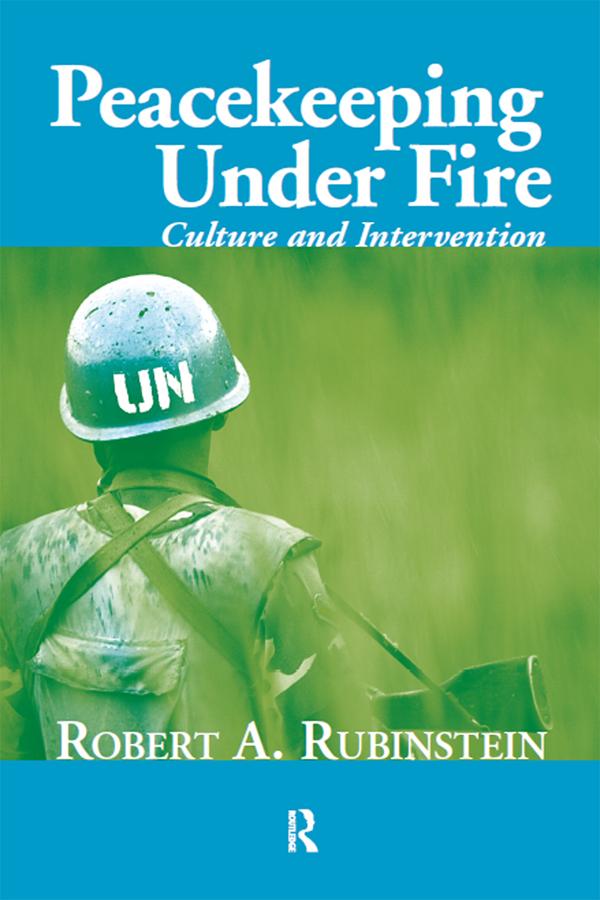
The international community increasingly responds to civil wars, humanitarian crises, and other intrastate conflicts through the instrument of UN peacekeeping. Nearly all of these interventions take place in non-Western areas and involve interactions among militaries and nongovernmental organizations from all around the globe. In this wide-ranging book, Rubinstein draws on decades of his own research on peacekeeping, and on other current and historical cases, to develop a broad understanding of the roles that culture plays in peacekeeping's success or failure. Peacekeeping under Fire shows that cultural considerations are key elements at all levels of peacekeeping operations. Culture influences what happens between peacekeepers and local populations, how military and nongovernmental organizations interact, and even how missions are planned and authorized. Peacekeeping under Fire analyzes how political symbolism and ritual are critical to peacekeeping and demonstrates how questions of power, identity, and political perception emerge from the cultural context of peacekeeping.
Pay easily by card, Klarna, Apple Pay or Google Pay. Not happy? You always have a 14-day money-back guarantee. Read more in our terms. If you have any questions, email us at hello@memmo.org.
Memmo makes studying easier – wherever you are in the world. We bring your course books and smart study tools together in one place: summaries, quizzes, podcasts and flashcards. Plus Ted, your study buddy who answers anything you wonder. Over 50,000 students already study here – built to help you learn faster and stress less.
You might also like
Buy the book0