
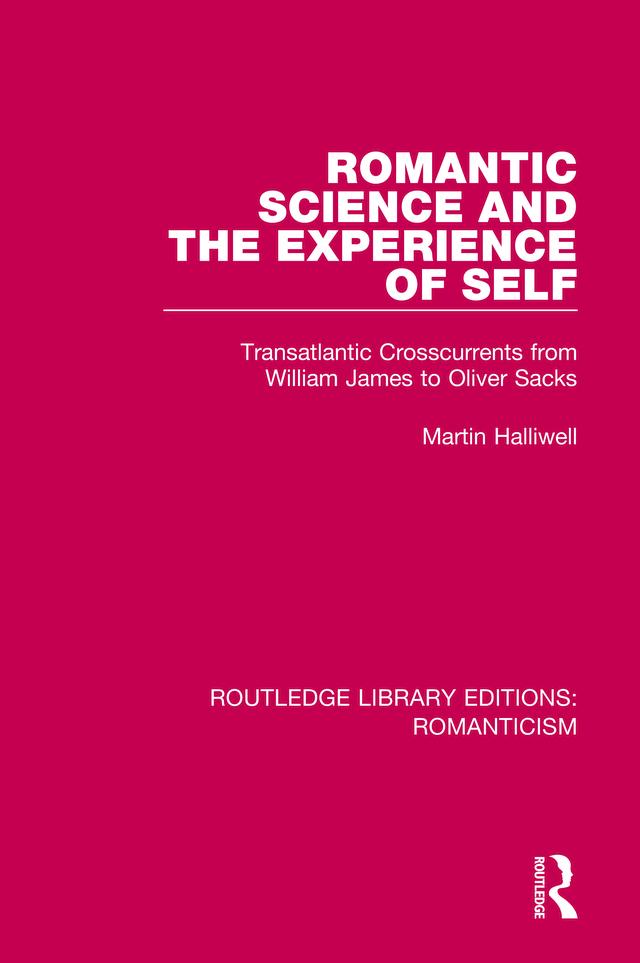
First published in 1999, this engaging interdisciplinary study of romantic science focuses on the work of five influential figures in twentieth-century transatlantic intellectual history. In this book, Martin Halliwell constructs an innovative tradition of romantic science by indicating points of theoretical and historical intersection in the thought of William James (American philosopher); Otto Rank (Austrian psychoanalyst); Ludwig Binswanger (Swiss psychiatrist); Erik Erikson (Danish/German psychologist); and Oliver Sacks (British neurologist).
Beginning with the ferment of intellectual activity in late eighteenth-century German Romanticism, Halliwell argues that only with William James’ theory of pragmatism early in the twentieth century did romantic science become a viable counter-tradition to strictly empirical science. Stimulated by debates over rival models of consciousness and renewed interest in theories of the self, Halliwell reveals that in their challenge to Freud’s adoption of ideas from nineteenth-century natural science, these thinkers have enlarged the possibilities of romantic science for bridging the perceived gulf between the arts and sciences.
Pay easily by card, Klarna, Apple Pay or Google Pay. Not happy? You always have a 14-day money-back guarantee. Read more in our terms. If you have any questions, email us at hello@memmo.org.
Memmo makes studying easier – wherever you are in the world. We bring your course books and smart study tools together in one place: summaries, quizzes, podcasts and flashcards. Plus Ted, your study buddy who answers anything you wonder. Over 50,000 students already study here – built to help you learn faster and stress less.