
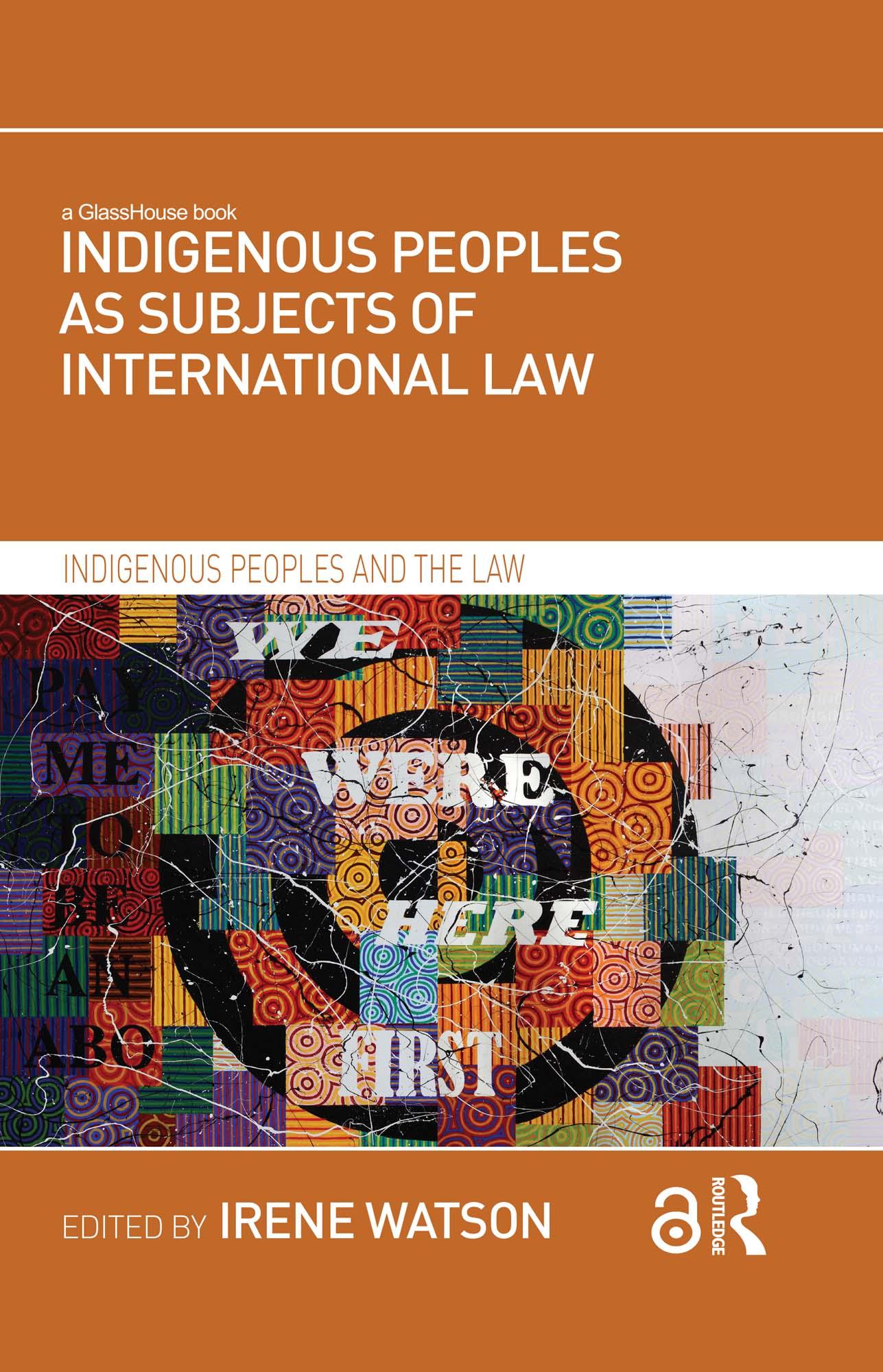
For more than 500 years, Indigenous laws have been disregarded. Many appeals for their recognition under international law have been made, but have thus far failed – mainly because international law was itself shaped by colonialism. How, this volume asks, might international law be reconstructed, so that it is liberated from its colonial origins?
With contributions from critical legal theory, international law, politics, philosophy and Indigenous history, this volume pursues a cross-disciplinary analysis of the international legal exclusion of Indigenous Peoples, and of its relationship to global injustice. Beyond the issue of Indigenous Peoples’ rights, however, this analysis is set within the broader context of sustainability; arguing that Indigenous laws, philosophy and knowledge are not only legally valid, but offer an essential approach to questions of ecological justice and the co-existence of all life on earth.
The Open Access version of this book, available at http://www.taylorfrancis.com, has been made available under a Creative Commons (CC-BY-NC-ND) 4.0 license.
Pay easily by card, Klarna, Apple Pay or Google Pay. Not happy? You always have a 14-day money-back guarantee. Read more in our terms. If you have any questions, email us at hello@memmo.org.
Memmo makes studying easier – wherever you are in the world. We bring your course books and smart study tools together in one place: summaries, quizzes, podcasts and flashcards. Plus Ted, your study buddy who answers anything you wonder. Over 50,000 students already study here – built to help you learn faster and stress less.