
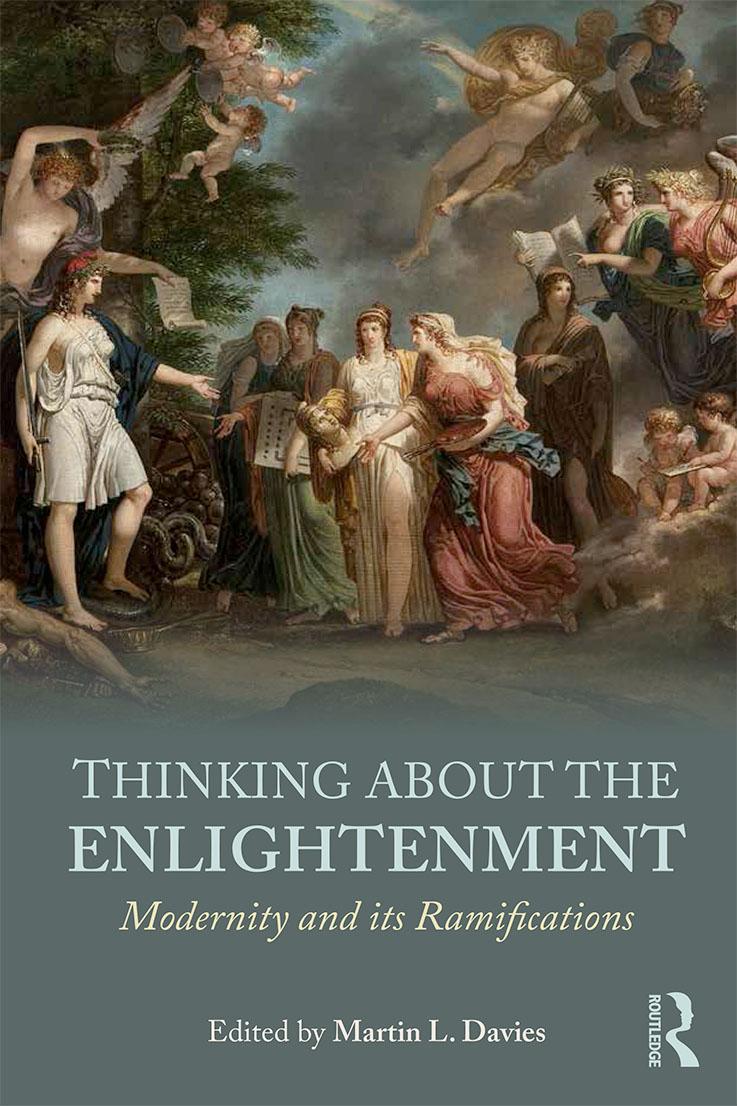
Thinking about the Enlightenment looks beyond the current parameters of studying the Enlightenment, to the issues that can be understood by reflecting on the period in a broader context. Each of the thirteen original chapters, by an international and interdisciplinary team of contributors, illustrates the problematic legacy of the Enlightenment and the continued ramifications of its thinking since the eighteenth century. Together, they consider whether modernity can see its roots in the intellectual revolution of the seventeenth and eighteenth centuries.
The collection is divided into six sections, preceded by a comprehensive introduction to the field and the most recent scholarship on the period. Across the sections, the contributors consider modern day encounters with Enlightenment thinking, including Kant’s moral philosophy, the conflict between reason and faith, the significance of the Enlightenment of law and the gender inequality that persisted throughout the eighteenth century. By examining specific encounters with the problematic results of Enlightenment concerns, the contributors are able to illuminate and offer new perspectives on topics such as human nature, race, politics, gender and rationality.
Drawing from history, philosophy, literature and anthropology, this book enables students and academics alike to take a fresh look at the Enlightenment and its legacy in the modern world.
Pay easily by card, Klarna, Apple Pay or Google Pay. Not happy? You always have a 14-day money-back guarantee. Read more in our terms. If you have any questions, email us at hello@memmo.org.
Memmo makes studying easier – wherever you are in the world. We bring your course books and smart study tools together in one place: summaries, quizzes, podcasts and flashcards. Plus Ted, your study buddy who answers anything you wonder. Over 50,000 students already study here – built to help you learn faster and stress less.