
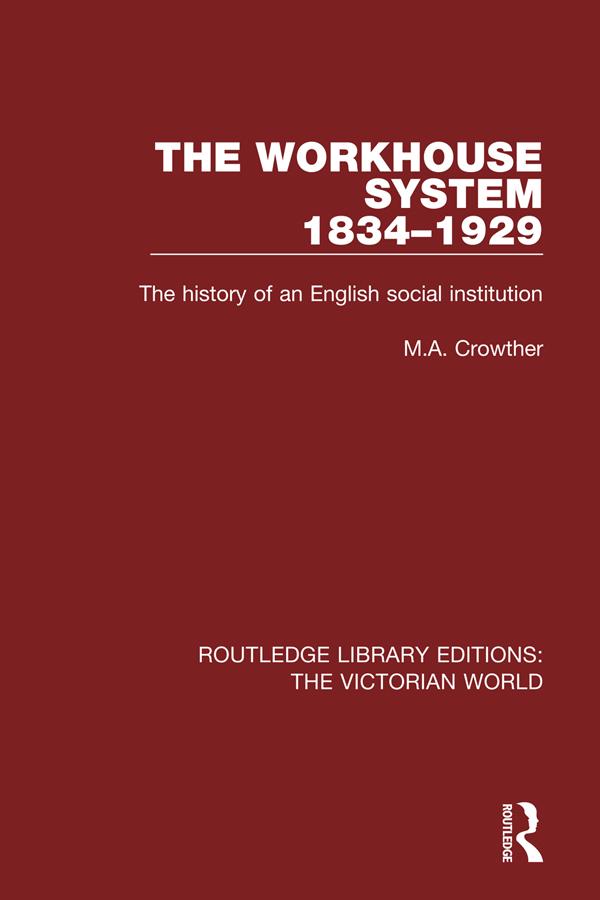
First published in 1981. Professor Crowther traces the history of the workhouse system from the Poor Law Amendment Act of 1834 to the Local Government Act of 1929.
At their outset the large residential institutions were seen by the Poor Law Commissioners as a cure for nearly all social ills. In fact these formidable, impersonal, prison-like buildings – housing all paupers under one roof – became institutionalised: places where routine came to be an end in itself. In the early twentieth century some of the workhouses became hospitals or homes for the old or handicapped but many continued to form a residual service for those who needed long-term care.
Crowther pays attention not only to the administrators but also to the inmates and their daily life. She illustrates that the workhouse system was not simply a nineteenth-century phenomenon but a forerunner of many of today’s social institutions.
Pay easily by card, Klarna, Apple Pay or Google Pay. Not happy? You always have a 14-day money-back guarantee. Read more in our terms. If you have any questions, email us at hello@memmo.org.
Memmo makes studying easier – wherever you are in the world. We bring your course books and smart study tools together in one place: summaries, quizzes, podcasts and flashcards. Plus Ted, your study buddy who answers anything you wonder. Over 50,000 students already study here – built to help you learn faster and stress less.