
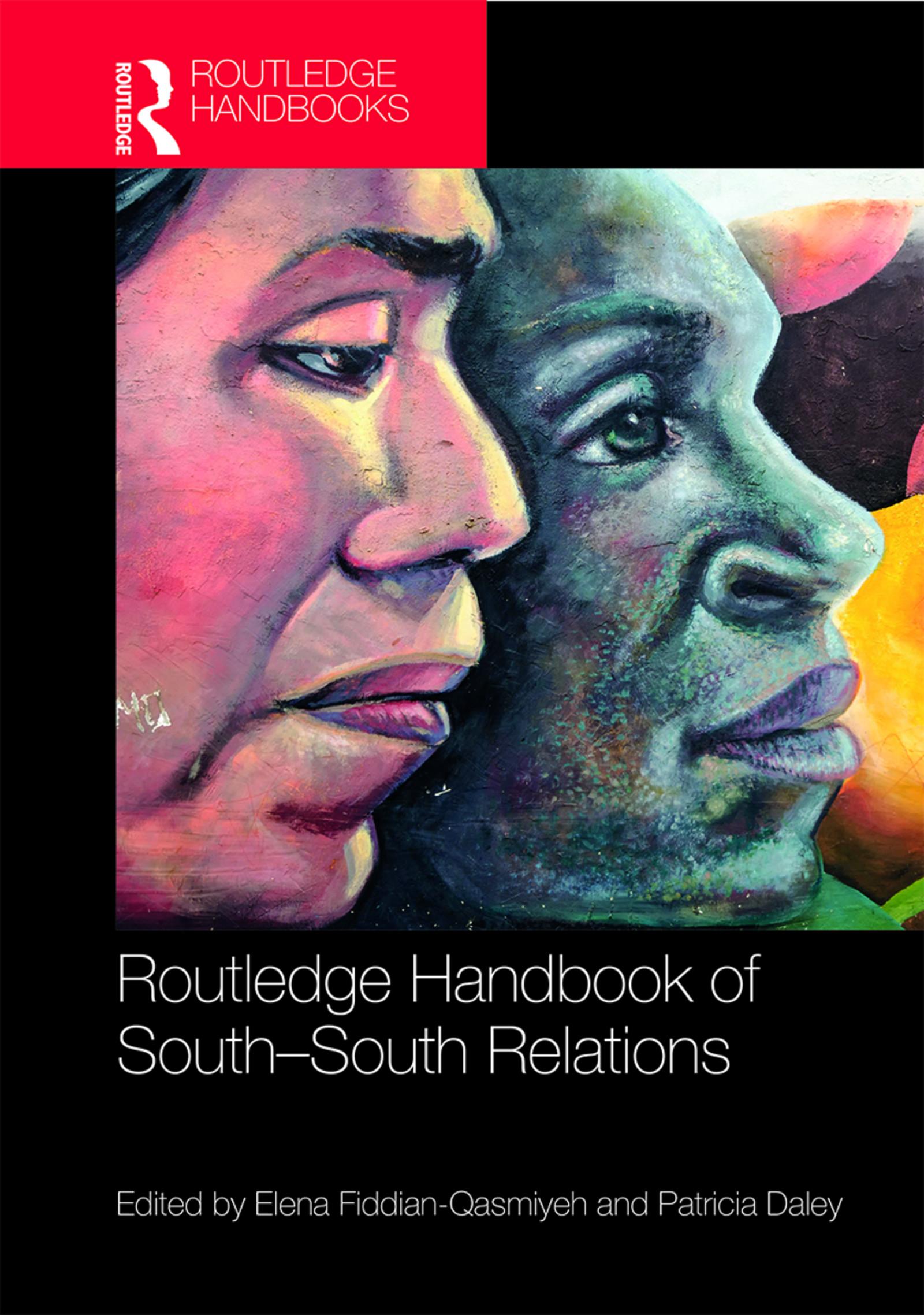
South-South cooperation is becoming ever more important to states, policy-makers and academics. Many Northern states, international agencies and NGOs are promoting South-South partnerships as a means of ‘sharing the burden’ in funding and undertaking development, assistance and protection activities, often in response to increased political and financial pressures on their own aid budgets. However, the mainstreaming of Southern-led initiatives by UN agencies and Northern states is paradoxical in many ways, especially because the development of a South-South cooperation paradigm was originally conceptualised as a necessary way to overcome the exploitative nature of North-South relations in the era of decolonisation.
This handbook critically explores diverse ways of defining ‘the South’ and of conceptualising and engaging with ‘South-South relations.’ Through 30 state-of-the-art reviews of key academic and policy debates, the handbook evaluates past, present and future opportunities and challenges of South-South cooperation, and lays out research agendas for the next 5-10 years. The book covers key models of cooperation (including internationalism, Pan-Arabism and Pan-Africanism), diverse modes of South-South connection, exchange and support (including South-South aid, transnational activism, and migration), and responses to displacement, violence and conflict (including Southern-led humanitarianism, peace-building and conflict resolution). In so doing, the handbook reflects on decolonial, postcolonial and anticolonial theories and methodologies, exploring urgent questions regarding the nature and implications of conducting research in and about the global South, and of applying a ‘Southern lens’ to a wide range of encounters, processes and dynamics across the global South and global North alike.
This handbook will be of great interest to scholars and post-graduate students in anthropology, area studies, cultural studies, development studies, history, geography, international relations, politics, postcolonial studies and sociology.
Pay easily by card, Klarna, Apple Pay or Google Pay. Not happy? You always have a 14-day money-back guarantee. Read more in our terms. If you have any questions, email us at hello@memmo.org.
Memmo makes studying easier – wherever you are in the world. We bring your course books and smart study tools together in one place: summaries, quizzes, podcasts and flashcards. Plus Ted, your study buddy who answers anything you wonder. Over 50,000 students already study here – built to help you learn faster and stress less.