
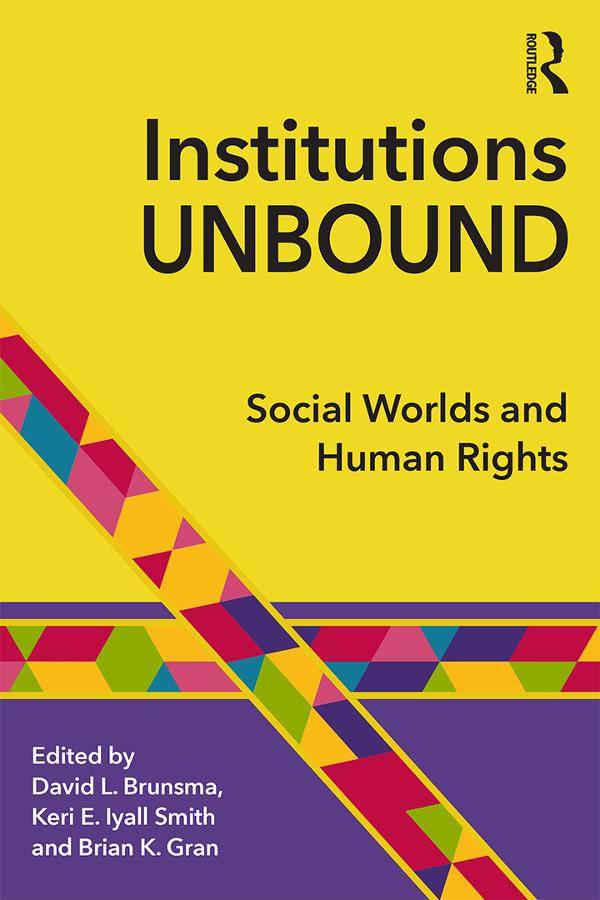
Institutions--like education, family, medicine, culture, and law--, are powerful social structures shaping how we live together. As members of society we daily express our adherence to norms and values of institutions as we consciously and unconsciously reject and challenge them. Our everyday experiences with institutions not only shape our connections with one another, they can reinforce our binding to the status quo as we struggle to produce social change. Institutions can help us do human rights. Institutions that bridge nation-states can offer resources, including norms, to advance human rights. These institutions can serve as touch stones to changing minds and confronting human rights violations. Institutions can also prevent us from doing human rights. We create institutions, but institutions can be difficult to change. Institutions can weaken, if not outright prevent, human rights establishment and implementation. To release human rights from their institutional bindings, sociologists must solve riddles of how institutions work and determine social life. This book is a step forward in identifying means by which we can loosen human rights from institutional constraints.
Pay easily by card, Klarna, Apple Pay or Google Pay. Not happy? You always have a 14-day money-back guarantee. Read more in our terms. If you have any questions, email us at hello@memmo.org.
Memmo makes studying easier – wherever you are in the world. We bring your course books and smart study tools together in one place: summaries, quizzes, podcasts and flashcards. Plus Ted, your study buddy who answers anything you wonder. Over 50,000 students already study here – built to help you learn faster and stress less.