
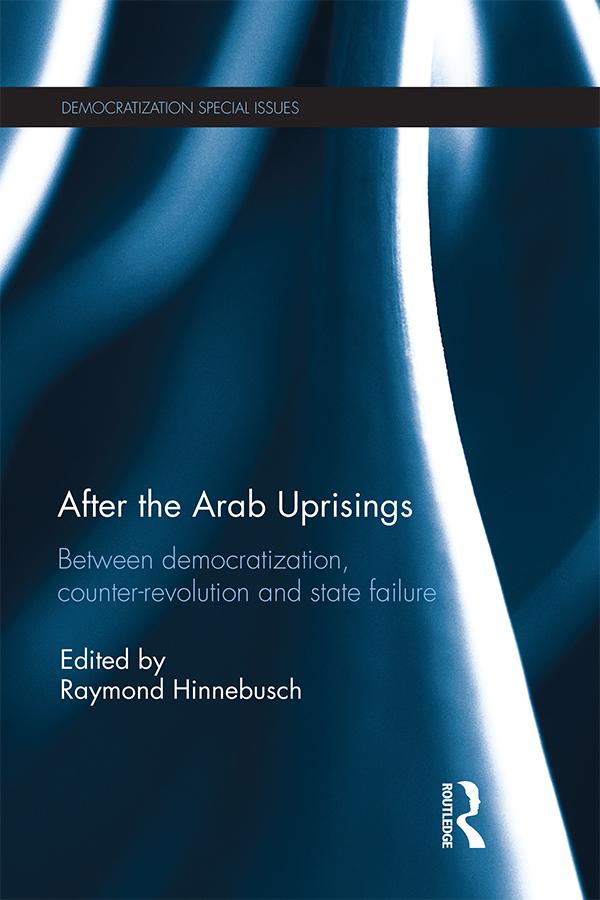
The Arab Uprisings that began in 2010 removed four presidents and made more mobilized mass publics an increased factor in the politics of regional states. The main initial problematic of the Arab Uprising was how to translate mass protest into democratization and ultimately democratic consolidation; yet four years later, there was little democratization. This book explores various aspects of this question while, comparing outcomes in three states, Egypt, Syria and Tunisia. The introduction by Raymond Hinnebusch explores how far different starting points —the features of the regime and of the uprising--explain these pathways. Morten Valbjørn then considers the consequences of the Arab uprisings for the credibility of rival democratization and post-democratization paradigms. Vincent Durac examines the efficacy of anti-system social movements in challenging regimes but their inability to steer a democratic transition. Joshua Stacher examines the increased violence deployed by more conercive authoritarian regimes to prevent such a transition. Frede´ric Volpi and Ewan Stein examine the conseuences of the relative balance between different kinds of Islamists for outcomes. James Allison then examines the impact of workers’ movements on democratic potentials. Adham Saouli assesses the mobilization of communal identities by ruling elites and counter-elites. Raymond Hinnebusch focuses on the negative impact on democratization of competitive external interference inside the uprising states. In Hinnebusch’s conclusion, the combined effects of the agency of these forces and the political, cultural, and economic contexts in which they operate are summarized. This book was previously published as a special issue of Democratization.
Pay easily by card, Klarna, Apple Pay or Google Pay. Not happy? You always have a 14-day money-back guarantee. Read more in our terms. If you have any questions, email us at hello@memmo.org.
Memmo makes studying easier – wherever you are in the world. We bring your course books and smart study tools together in one place: summaries, quizzes, podcasts and flashcards. Plus Ted, your study buddy who answers anything you wonder. Over 50,000 students already study here – built to help you learn faster and stress less.