
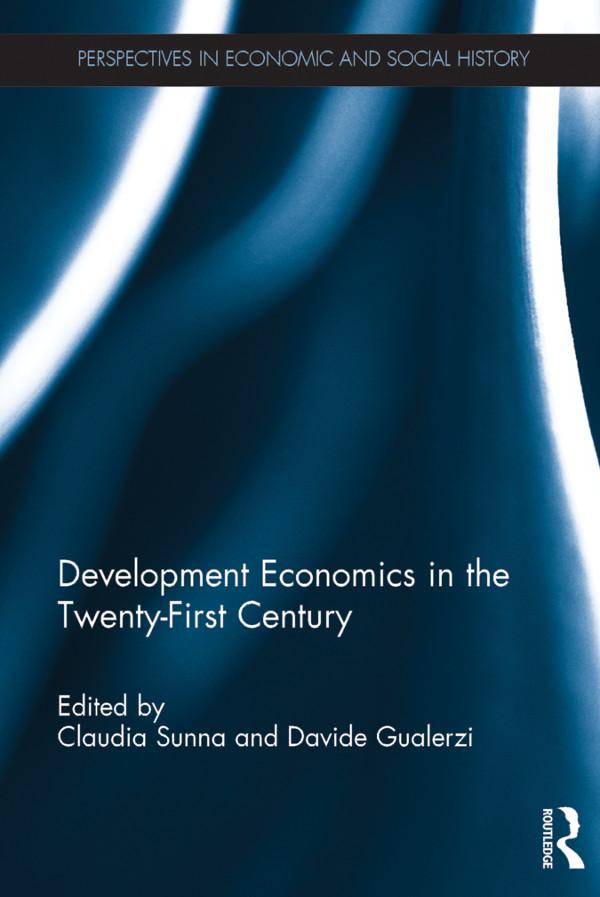
Development Economics has been identified as a homogeneous body of theory since the 1950s, concerned both with the study of development issues and with the shaping of more effective policies for less advanced economies.
Development Economics in the Twenty-First Century brings together an international contributor team in order to explore the origins and evolution of development economics. This book highlights the different elements of ‘high development theory’ through a precise reconstruction of the different theoretical approaches that developed between the 1950s and the 1970s. These include the theory of balanced and unbalanced growth theory, the debate on international trade, the concept of dualism, dependency theory, structuralism and the analysis of poverty and institutions. The chapters highlight the relevance and usefulness of these analyses for the contemporary theoretical debate on development issues.
Comparative perspectives are explored and analysed, including those of Keynes, Hirschman, Krugman and Stiglitz. The chapters situate development economics within current debates among economists and historians of economic thought, providing a platform for future research. This book is suitable for researchers and students with an interest in Development Economics, the History of Economic development and the Economics of Developing Countries.
Pay easily by card, Klarna, Apple Pay or Google Pay. Not happy? You always have a 14-day money-back guarantee. Read more in our terms. If you have any questions, email us at hello@memmo.org.
Memmo makes studying easier – wherever you are in the world. We bring your course books and smart study tools together in one place: summaries, quizzes, podcasts and flashcards. Plus Ted, your study buddy who answers anything you wonder. Over 50,000 students already study here – built to help you learn faster and stress less.