
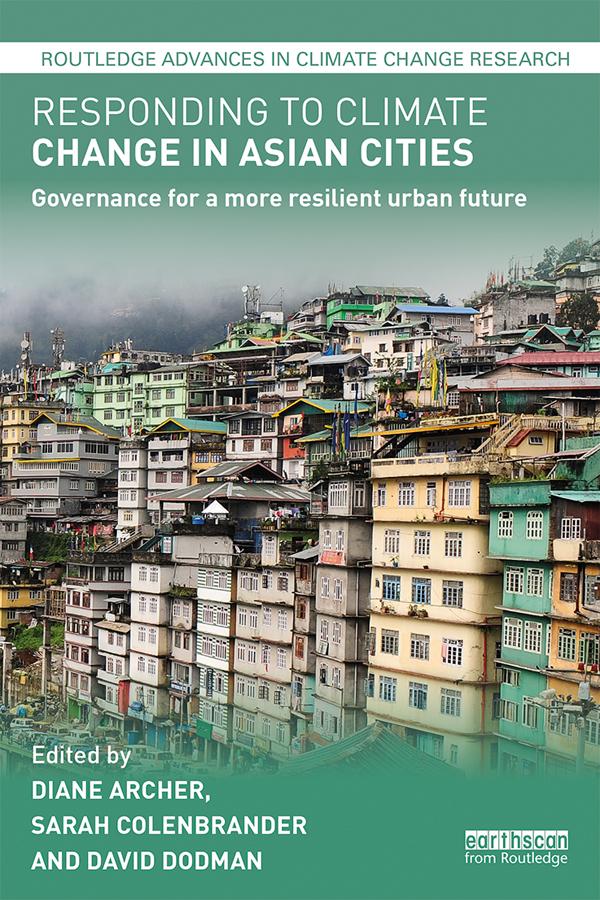
The role of cities in addressing climate change is increasingly recognised in international arenas, including the Sustainable Development Goals, the UN Framework Convention on Climate Change, and the New Urban Agenda. Asia is home to many of the countries that are most vulnerable to climate change impacts and, along with Africa, will be the site of most urban population growth over the coming decades.
Bringing together a range of city experiences, Responding to Climate Change in Asian Cities provides valuable insights into how cities can overcome some of the barriers to building climate resilience, including addressing the needs of vulnerable populations. The chapters are centred on an overarching understanding that adaptive urban governance is necessary for climate resilience. This requires engaging with different actors to take into account their experiences, vulnerabilities and priorities; building knowledge, including collecting and using appropriate evidence; and understanding the institutions shaping interactions between actors, from the national to the local level.
The chapters draw on a mix of research methodologies, demonstrating the variety of approaches to understanding and building urban resilience that can be applied in urban settings. Bringing together a range of expert contributors, this book will be of great interest to scholars of urban studies, sustainability and environmental studies, development studies and Asian studies.
Pay easily by card, Klarna, Apple Pay or Google Pay. Not happy? You always have a 14-day money-back guarantee. Read more in our terms. If you have any questions, email us at hello@memmo.org.
Memmo makes studying easier – wherever you are in the world. We bring your course books and smart study tools together in one place: summaries, quizzes, podcasts and flashcards. Plus Ted, your study buddy who answers anything you wonder. Over 50,000 students already study here – built to help you learn faster and stress less.