
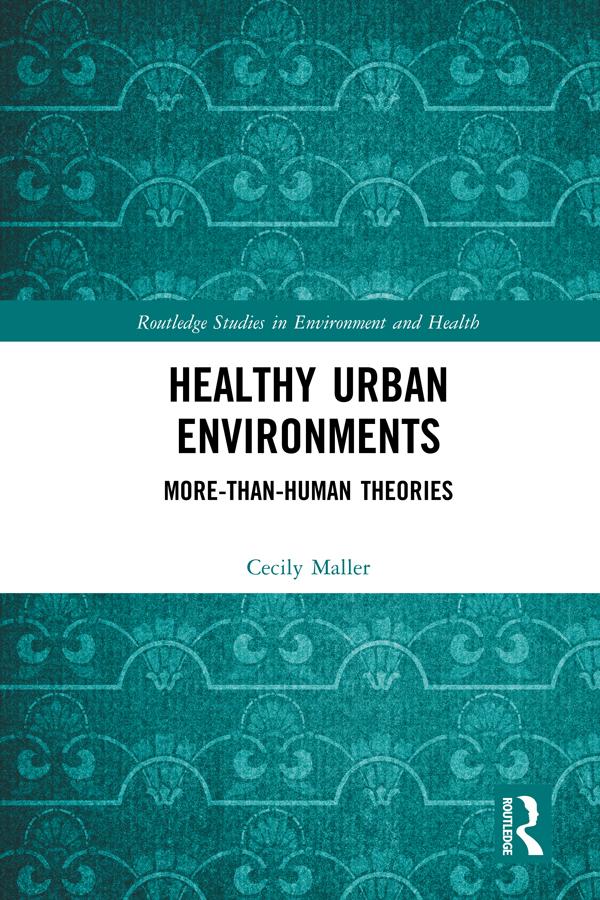
Set in the ‘human–environment’ interaction space, this book applies new theoretical and practical insights to understanding what makes healthy urban environments. It stems from recognition that the world is rapidly urbanising and the international concern with how to create healthy settings and liveable cities in the context of a rapidly changing planet. A key argument is that usual attempts to make healthy cities are limited by human-centrism and bifurcated, western thinking about cities, health and nature. Drawing on the innovative ‘more-than-human’ scholarship from a range of disciplines, it presents a synthesis of the main contributions, and how they can be used to rethink what healthy urban environments are, and who they are for. In particular, the book turns its attention to urban biodiversity and the many non-human species that live in, make and share cities with humans.
The book will be of interest to scholars and students in human geography, health sociology, environmental humanities, public health, health promotion, planning and urban design, as well as policymakers and professionals working in these fields.
Pay easily by card, Klarna, Apple Pay or Google Pay. Not happy? You always have a 14-day money-back guarantee. Read more in our terms. If you have any questions, email us at hello@memmo.org.
Memmo makes studying easier – wherever you are in the world. We bring your course books and smart study tools together in one place: summaries, quizzes, podcasts and flashcards. Plus Ted, your study buddy who answers anything you wonder. Over 75,000 students already study here – built to help you learn faster and stress less.