
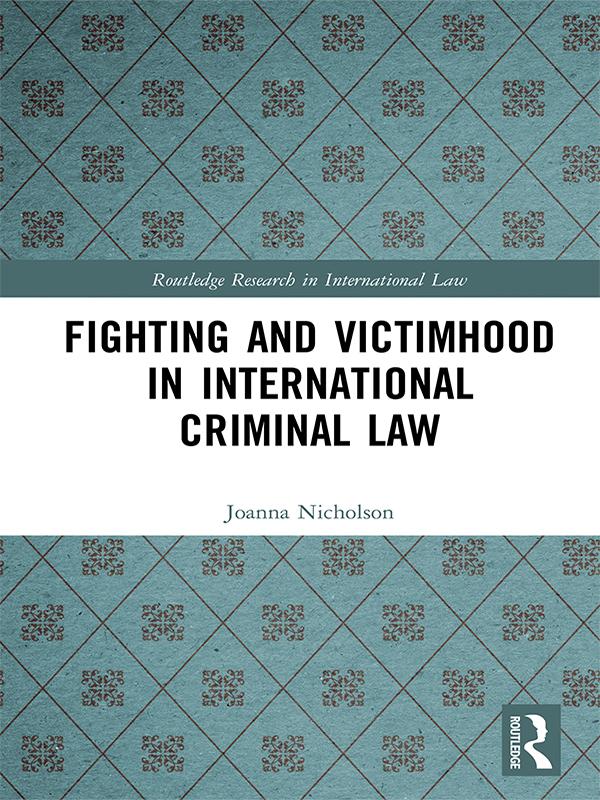
The act of fighting or being a fighter has certain consequences in international law. The most obvious example can be found in international humanitarian law, where a distinction is drawn between fighters and civilians, with fighters being military objectives and civilians being protected from attack. Another example is from international human rights law, where it has been held that the particular characteristics of military life have to be taken into account when interpreting the human rights of members of state armed forces. This volume focuses on the field of international criminal law and asks the question: what relevance does fighting have to victimhood in international criminal law?
Among the topics which are explored are: how have international criminal courts and tribunals untangled lawful casualties of war from victims of war crimes? How have they determined who is a member of an organised armed group and who is not? What crimes can those who fight be victims of during hostilities? When does it become relevant in international criminal law that an alleged victim of a crime was a person hors de combat rather than a civilian? Can war crimes be committed against members of non-opposing forces? Can persons hors de combat be victims of crimes against humanity and genocide? What special considerations surround peacekeepers and child soldiers as victims of international crimes?
The author carries out an in-depth exploration of case law from international criminal courts and tribunals to assess how they have dealt with these questions. She concludes that the import of fighting upon victimhood in the context of international criminal law has not always been appreciated to the extent it should have been.
Pay easily by card, Klarna, Apple Pay or Google Pay. Not happy? You always have a 14-day money-back guarantee. Read more in our terms. If you have any questions, email us at hello@memmo.org.
Memmo makes studying easier – wherever you are in the world. We bring your course books and smart study tools together in one place: summaries, quizzes, podcasts and flashcards. Plus Ted, your study buddy who answers anything you wonder. Over 50,000 students already study here – built to help you learn faster and stress less.