
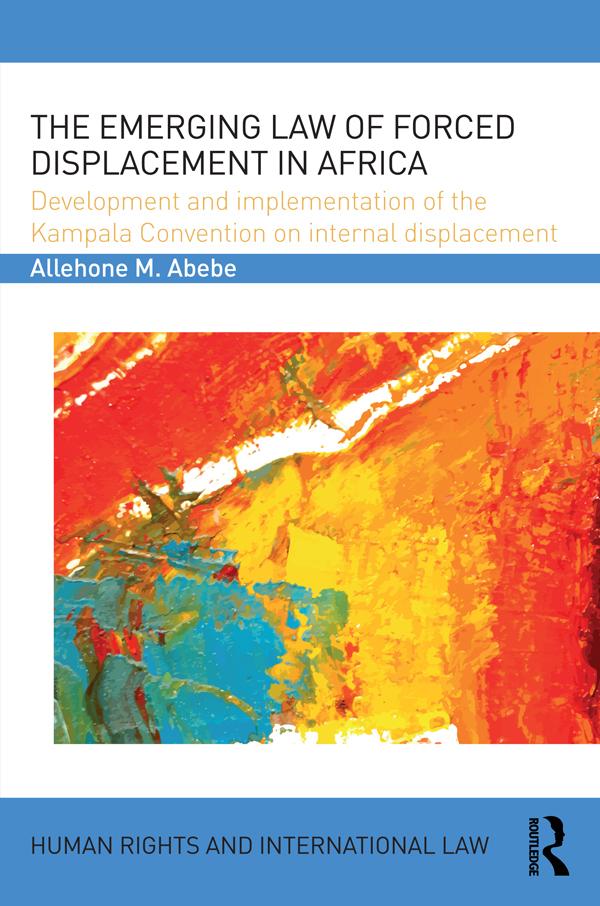
As of the end of 2015, there were 40.8 civilians who had been internally displaced by conflicts and effects of natural disasters in various parts of the world. Internally displaced persons (IDPs) are currently the largest group of persons receiving assistance from some of the main international humanitarian organisations. With the largest concentration of internally displaced persons (IDPs), the African continent has been the worst affected region. While previously IDPs have largely been neglected under international law, the first-ever continental binding treaty on internal displacement, the African Union Convention on the Protection of and Assistance to Internally Displaced Persons (the Kampala Convention), entered into force on 6 December 2012. As of January 2016, 25 states have ratified the instrument while 40 states have become signatories.
This book significantly contributes to the study, policy making and practice on managing internal displacement by presenting the first major systematic examination of the evolution, elements and implementation of the Kampala Convention. It explores the responsibility of the state for the protection of IDPs particularly those who are most vulnerable during armed conflicts, internal strife, natural disasters, human rights violations and other circumstances. The status of ratification of the Convention is reviewed as well as the steps currently being undertaken by governments to implement the Convention. It also analyses the contribution by human rights mechanisms, inter-governmental bodies and UN peace-keeping missions in the implementation of the Convention. The book casts the Kampala Convention in broader institutional and normative developments in Africa and beyond. It demonstrates how concepts such as ‘responsibility to protect’ and ‘sovereignty as responsibility’ have begun to make inroads; influencing some of the more progressive instruments adopted by the African Union. It also sheds light on the relationship between the Convention and some regional instruments. In assessing the effectiveness of the Kampala Convention Allehone Abebe argues that the link between the Convention and initiatives on development, human rights and governance in Africa should be fully fostered.
Pay easily by card, Klarna, Apple Pay or Google Pay. Not happy? You always have a 14-day money-back guarantee. Read more in our terms. If you have any questions, email us at hello@memmo.org.
Memmo makes studying easier – wherever you are in the world. We bring your course books and smart study tools together in one place: summaries, quizzes, podcasts and flashcards. Plus Ted, your study buddy who answers anything you wonder. Over 50,000 students already study here – built to help you learn faster and stress less.