
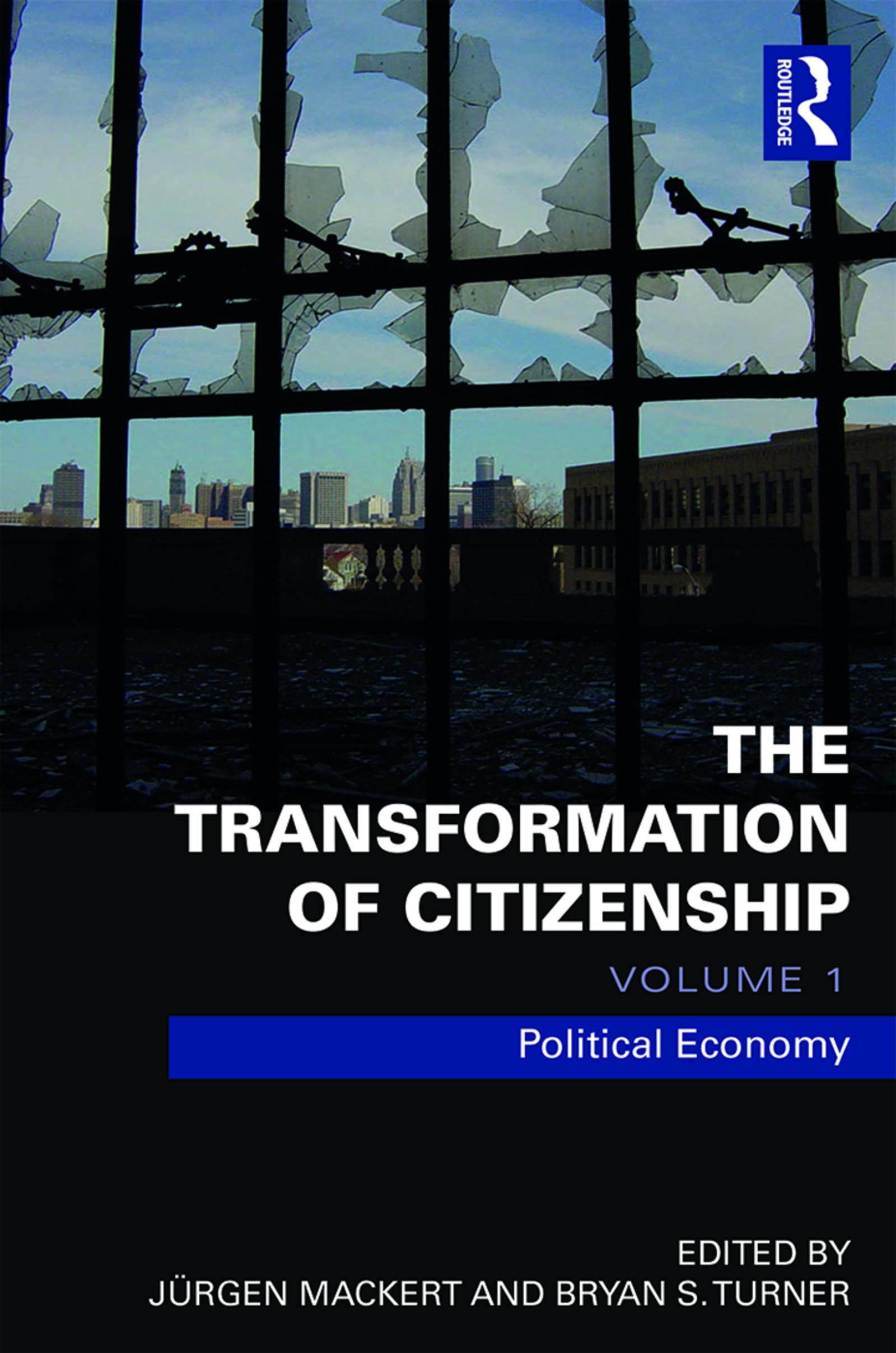
The Transformation of Citizenship addresses the basic question of how we can make sense of citizenship in the twenty-first century. These volumes make a strong plea for a reorientation of the sociology of citizenship and address serious threats of an ongoing erosion of citizenship rights. Arguing from different scientific perspectives, rather than offering new conceptions of citizenship as supposedly more adequate models of rights, membership and belonging, they deal with both the ways citizenship is transformed and the ways it operates in the face of fundamentally transformed conditions.
This volume Political Economy discusses manifold consequences of a decades-long enforcement of neo-liberalism for the rights of citizens. As neo-liberalism not only means a new form of economic system, it has to be conceived of as an entirely new form of global, regional and national governance that radically transforms economic, political and social relations in society. Its consequences for citizenship as a social institution are no less than dramatic. Against the background of both manifest and ideological processes the book looks at if citizenship has lost the basis it has rested upon for decades, or if the institution itself is in a process of being fundamentally transformed and restructured, thereby changing its meaning and the significance of citizens’ rights. This book will appeal to academics working in the field of political theory, political sociology and European studies.
Pay easily by card, Klarna, Apple Pay or Google Pay. Not happy? You always have a 14-day money-back guarantee. Read more in our terms. If you have any questions, email us at hello@memmo.org.
Memmo makes studying easier – wherever you are in the world. We bring your course books and smart study tools together in one place: summaries, quizzes, podcasts and flashcards. Plus Ted, your study buddy who answers anything you wonder. Over 50,000 students already study here – built to help you learn faster and stress less.