
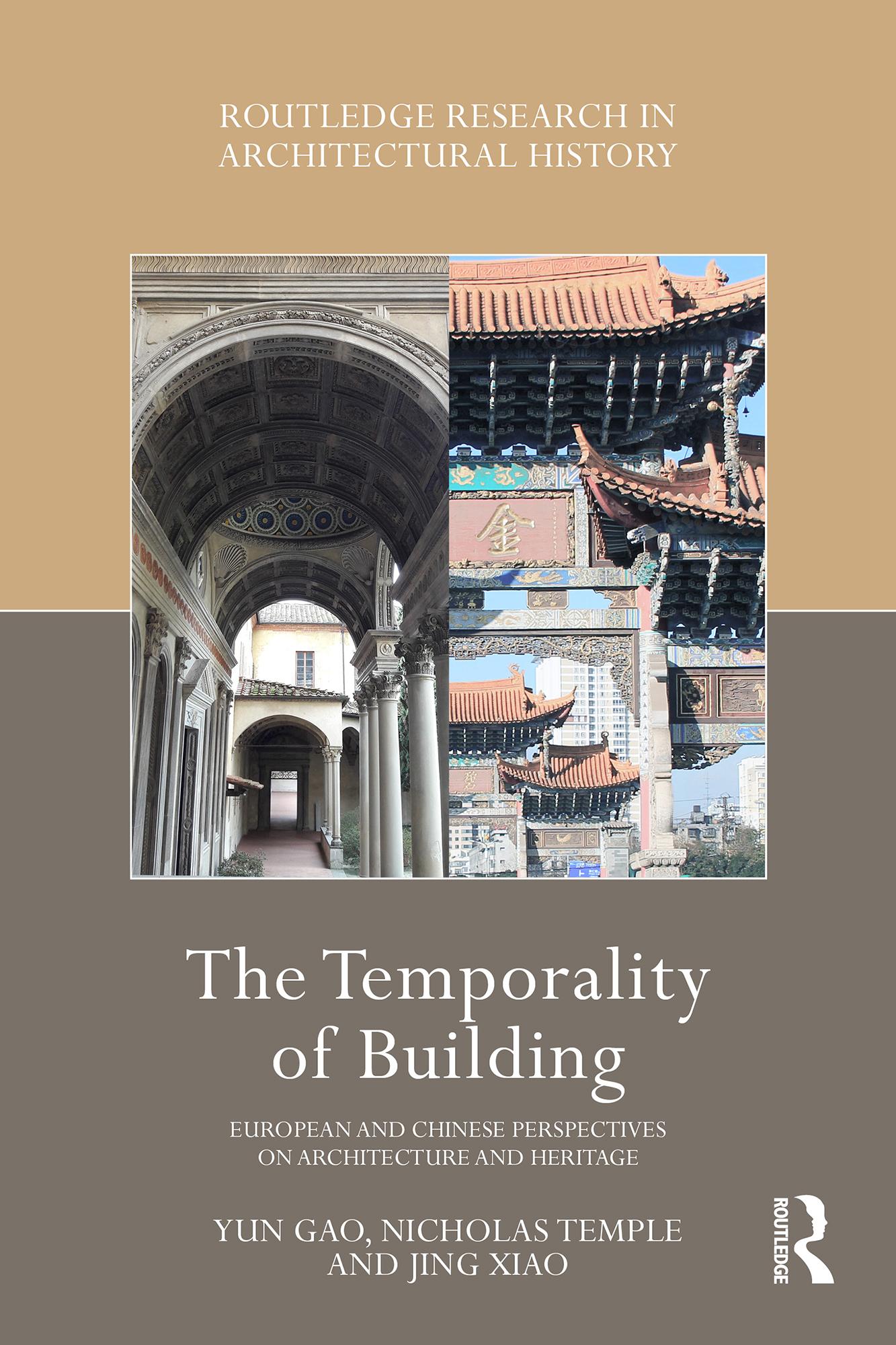
This book examines the role that time plays in the life of buildings, adopting a comparative study of this influence between European and Chinese traditions. Whilst issues of time in architecture have attracted increasing interest by academics in the West, challenging the dominant modernist precepts of space, there is little understanding of the subject in China and how these compare to historical and contemporary perspectives in Europe. A guiding premise of the investigation is that notions of building time require insight into how cultural habits commingle with natural rhythms, or what David Leatherbarrow calls “concurrency”.
Rather than examining specific buildings, the first three chapters apply three key themes (language, ritual and heritage) as cultural lenses to reveal differences and similarities between the two traditions. Through these lenses, buildings, interiors and their exterior spaces (churches/cathedrals, temples, palaces, gardens and courtyard houses) are explored to demonstrate how building time involves particular situations/settings and their correlating relationships to past traditions. In the final chapter we consider notions of time in the context of contemporary buildings in Europe and China, drawing on the earlier historical investigations and addressing globalising influences.
This book would be of interest to architects, architectural theorists, historians, philosophers, sociologists and anthropologists.
Pay easily by card, Klarna, Apple Pay or Google Pay. Not happy? You always have a 14-day money-back guarantee. Read more in our terms. If you have any questions, email us at hello@memmo.org.
Memmo makes studying easier – wherever you are in the world. We bring your course books and smart study tools together in one place: summaries, quizzes, podcasts and flashcards. Plus Ted, your study buddy who answers anything you wonder. Over 75,000 students already study here – built to help you learn faster and stress less.