
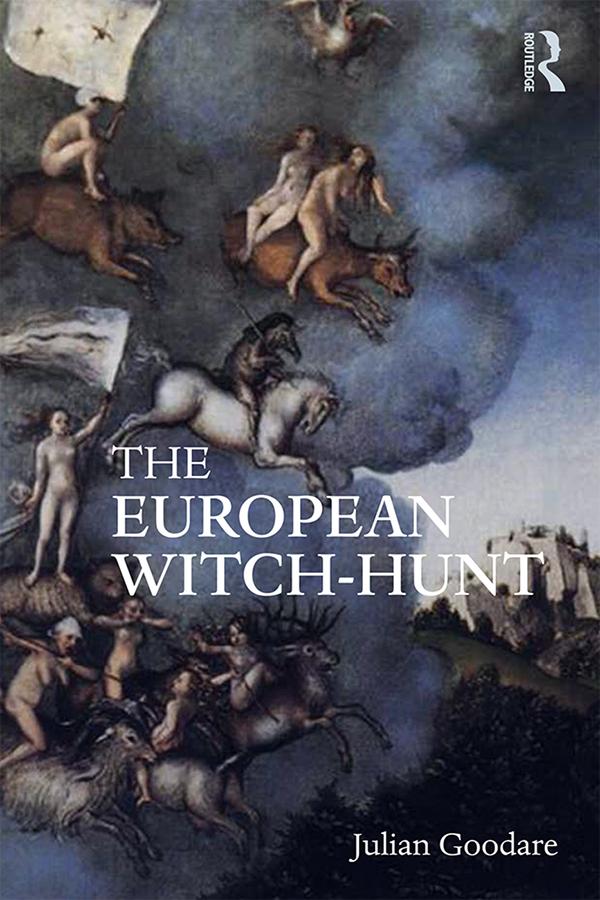
The European Witch-Hunt seeks to explain why thousands of people, mostly lower-class women, were deliberately tortured and killed in the name of religion and morality during three centuries of intermittent witch-hunting throughout Europe and North America.
Combining perspectives from history, sociology, psychology and other disciplines, this book provides a comprehensive account of witch-hunting in early modern Europe. Julian Goodare sets out an original interpretation of witch-hunting as an episode of ideologically-driven persecution by the ‘godly state’ in the era of the Reformation and Counter-Reformation. Full weight is also given to the context of village social relationships, and there is a detailed analysis of gender issues. Witch-hunting was a legal operation, and the courts’ rationale for interrogation under torture is explained. Panicking local elites, rather than central governments, were at the forefront of witch-hunting. Further chapters explore folk beliefs about legendary witches, and intellectuals’ beliefs about a secret conspiracy of witches in league with the Devil. Witch-hunting eventually declined when the ideological pressure to combat the Devil’s allies slackened. A final chapter sets witch-hunting in the context of other episodes of modern persecution.
This book is the ideal resource for students exploring the history of witch-hunting. Its level of detail and use of social theory also make it important for scholars and researchers.
Pay easily by card, Klarna, Apple Pay or Google Pay. Not happy? You always have a 14-day money-back guarantee. Read more in our terms. If you have any questions, email us at hello@memmo.org.
Memmo makes studying easier – wherever you are in the world. We bring your course books and smart study tools together in one place: summaries, quizzes, podcasts and flashcards. Plus Ted, your study buddy who answers anything you wonder. Over 50,000 students already study here – built to help you learn faster and stress less.