
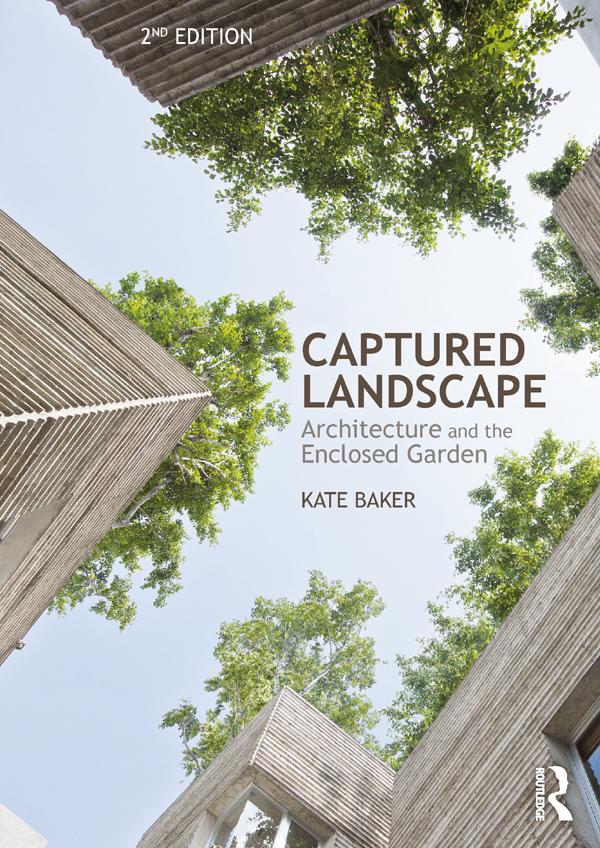
The enclosed garden, or hortus conclusus, is a place where architecture and landscape come together. It has a long and varied history, ranging from the early paradise garden and cloister, the botanic garden and giardini segreto, the kitchen garden and as a stage for social display. The enclosed garden has continued to develop into its many modern forms: the city retreat, the redemptive garden, the deconstructed building. As awareness of climate change becomes increasingly important, the enclosed garden, which can mediate so effectively between interior and exterior, provides opportunities for sustainable design and closer contact with the natural landscape. By its nature it is ambiguous. Is it an outdoor room, or captured landscape; is it architecture or garden?
Kate Baker discusses the continuing relevance of the typology of the enclosed garden to contemporary architects by exploring influential historical examples and the concepts they generate, alongside some of the best of contemporary designs – brought to life with vivid photography and detailed drawings – taken primarily from Britain, the Mediterranean, Japan and North and South America. She argues that understanding the potential of the enclosed garden requires us to think of it as both a design and an experience.
Captured Landscape provides a broad range of information and design possibilities for students of architectural and landscape design, practising architects, landscape designers and horticulturalists and will also appeal to a wider audience of all those who are interested in garden design.
This second edition of Captured Landscape is enriched with new case studies throughout the book. The scope has now been broadened to include an entirely new chapter concerning the urban condition, with detailed discussions on issues of ecology, sustainability, economy of means, well-being and the social pressures of contemporary city life.
Pay easily by card, Klarna, Apple Pay or Google Pay. Not happy? You always have a 14-day money-back guarantee. Read more in our terms. If you have any questions, email us at hello@memmo.org.
Memmo makes studying easier – wherever you are in the world. We bring your course books and smart study tools together in one place: summaries, quizzes, podcasts and flashcards. Plus Ted, your study buddy who answers anything you wonder. Over 75,000 students already study here – built to help you learn faster and stress less.