
China’s phenomenal economic growth in the past 30 years has witnessed the rise of its global natural resources companies. At the same time, the emerging of a middle class in China and their desire to improve living standards including better dwelling conditions, better health and nutrition, has driven strong demand in mineral resources, energy and quality food. The so called ‘socialist market economy’ in China has seen this growing demand being met partially by companies with ‘national significance’. In the resources sector, these companies are represented by companies listed in stock exchanges in China as well as globally such as in New York and London; at the same time, most of these companies are also controlled by the Chinese government.
China’s resources companies have expanded overseas in search of new acquisition targets whilst seeking to extend their global reach with a focus on resource rich countries. The expansion of these companies internationally, and the unique ownership structure of these companies, has posed challenges for regulators, trading partners of these companies, investors and other interested parties seeking to understand how these companies are governed and the implications of government ownership for resource security globally.
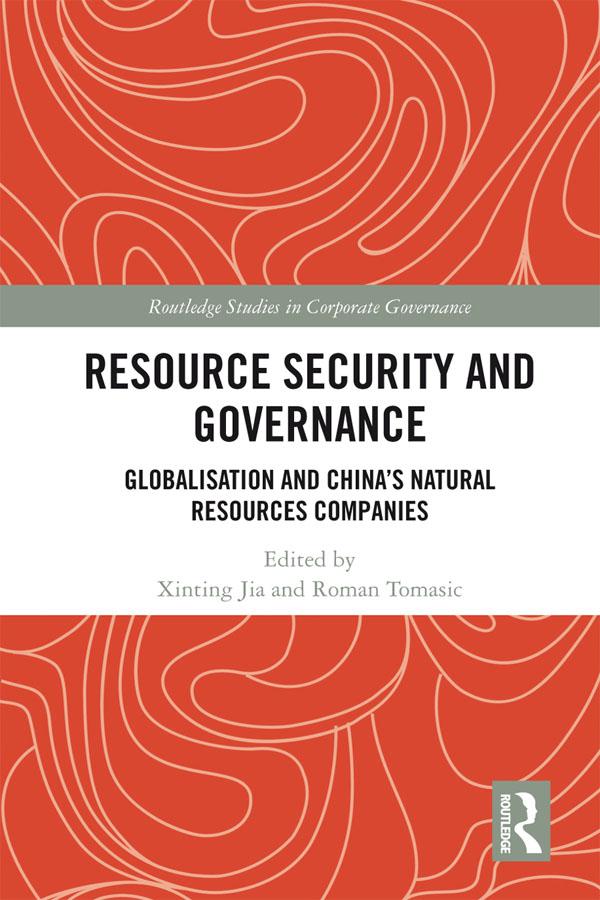
Resource Security and Governance: The Globalisation of China’s Natural Resources Companies contains case studies of the global expansion efforts of Chinese global natural resources companies; it reviews the governance structures of these companies and analyses how these have affected the inter-relationship between these companies and their trading partners, governments, regulators in targeted countries and investors globally. In addition, this book examines how the unique structure of these companies may affect resource security globally and touches on other related matters such as climate change, and air and water security in China.
Pay easily by card, Klarna, Apple Pay or Google Pay. Not happy? You always have a 14-day money-back guarantee. Read more in our terms. If you have any questions, email us at hello@memmo.org.
Memmo makes studying easier – wherever you are in the world. We bring your course books and smart study tools together in one place: summaries, quizzes, podcasts and flashcards. Plus Ted, your study buddy who answers anything you wonder. Over 50,000 students already study here – built to help you learn faster and stress less.