
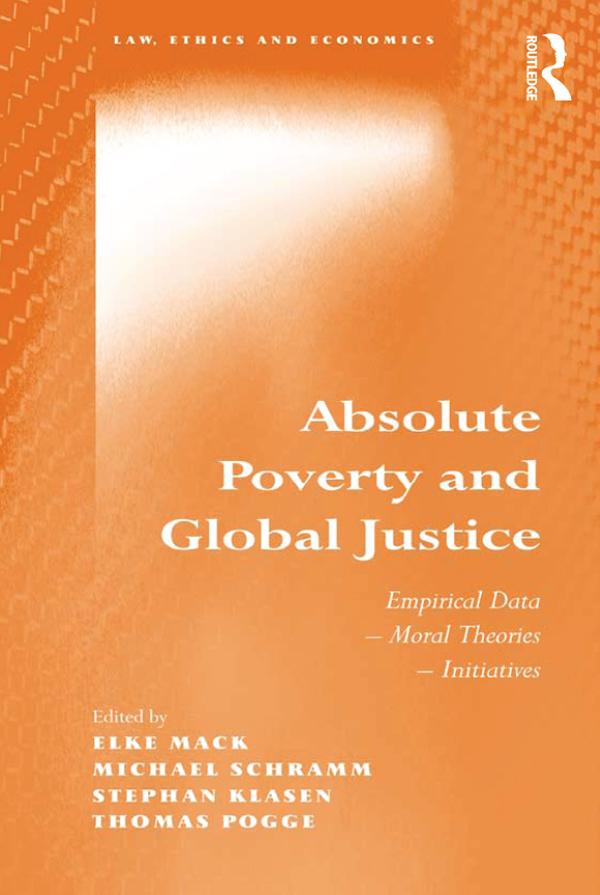
Absolute poverty causes about one third of all human deaths, some 18 million annually, and blights billions of lives with hunger and disease. Developing universalizable norms aimed at tackling absolute poverty and the complex and multilayered problems associated with it, this book considers the levels, trends and determinants of absolute poverty and global inequality. Examining whether much faster progress against absolute poverty is possible through reductions in national and global inequalities that produce economic growth for poor countries and households, this book suggests that diverse moral views imply that international agencies as well as the citizens, corporations and governments of affluent countries bear a moral responsibility to reduce absolute poverty. In considering strategies of eradication through specific policies and structural reforms it is argued that because of its moral importance and requirement for only modest efforts and resources, the goal of overcoming absolute poverty must be given much higher political priority by international agencies and governments of affluent countries. Suggesting that these agencies should be encouraged to facilitate and promote new initiatives, this book concludes with a discussion of how such initiatives might be realized.
Pages: 302
Category: Ekonomi & Utveckling
e-ISBN: 9781317185970
Shipping weight: 1.2 kg
Ships in: 1-2 days
Pay easily by card, Klarna, Apple Pay or Google Pay. Not happy? You always have a 14-day money-back guarantee. Read more in our terms. If you have any questions, email us at hello@memmo.org.
Memmo makes studying easier – wherever you are in the world. We bring your course books and smart study tools together in one place: summaries, quizzes, podcasts and flashcards. Plus Ted, your study buddy who answers anything you wonder. Over 50,000 students already study here – built to help you learn faster and stress less.
You might also like
Buy the book0