
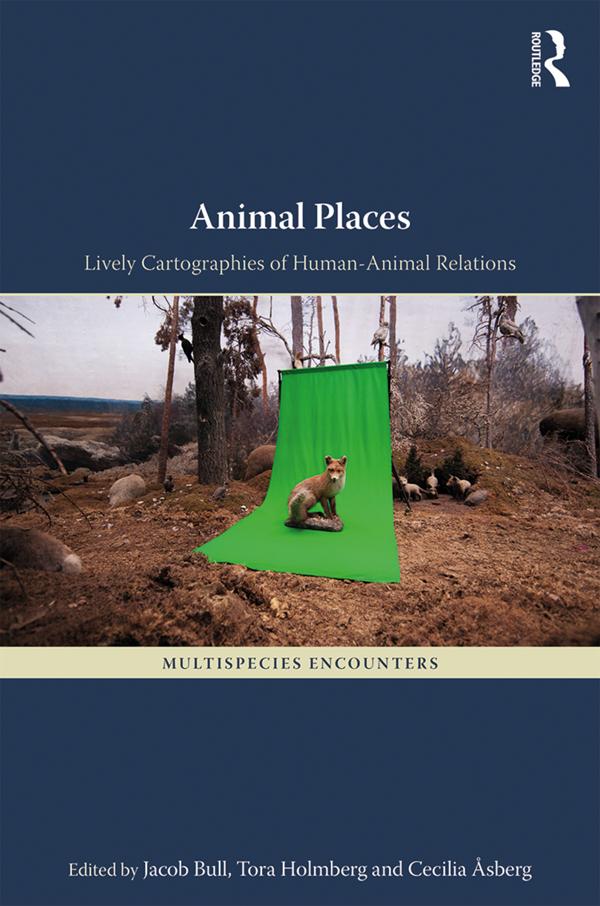
Nonhuman animals are ubiquitous to our ‘human’ societies. Interdisciplinary human/animal research has - for 50 years - drawn attention to how animals are ever-present in what we think of as human spaces and cultures. Our societies are built with animals and through all kinds of multispecies interactions. From public spaces and laboratories to homes, farms and in the ‘wilderness’; human and nonhuman animals meet to make space and place together, through webs of power relations. However, the very spaces of these interactions are not mute or passive themselves. The spaces where species meet matter, and shape human/animal relations.
This book takes as its starting point the relationship between place and human/animal interaction. It brings together the work of leading scholars in human/animal studies, from a variety of disciplinary and interdisciplinary backgrounds. With a distinct focus on place, physical space and biocultural geography, the authors of this volume consider the ways in which space, human and nonhuman animals co-constitute each other, how they make spaces together, produce meaning around them, struggle over access, how these places are storied and how stories of spaces matter. Presenting studies thematically and including a variety of nonhuman creatures in a range of settings, this book delivers new understandings of the importance of nonhuman animals to understandings of place - and the role of places in shaping our interactions with nonhuman creatures. As pets, as laboratory animals, as exhibits, as parasites, as livestock, as quarry, as victims of disaster or objects of folklore, this book offers insights into human/animal intermingling at locales and settings of great relevance to many areas of research, including geography, sociology, science and technology studies, gender studies, history and anthropology. This book meets the evolving interest in human/animal interaction, anthrozoology, and the environmental humanities in relation to the research on space and place that currently informs the humanities and the social sciences.
Pay easily by card, Klarna, Apple Pay or Google Pay. Not happy? You always have a 14-day money-back guarantee. Read more in our terms. If you have any questions, email us at hello@memmo.org.
Memmo makes studying easier – wherever you are in the world. We bring your course books and smart study tools together in one place: summaries, quizzes, podcasts and flashcards. Plus Ted, your study buddy who answers anything you wonder. Over 50,000 students already study here – built to help you learn faster and stress less.