
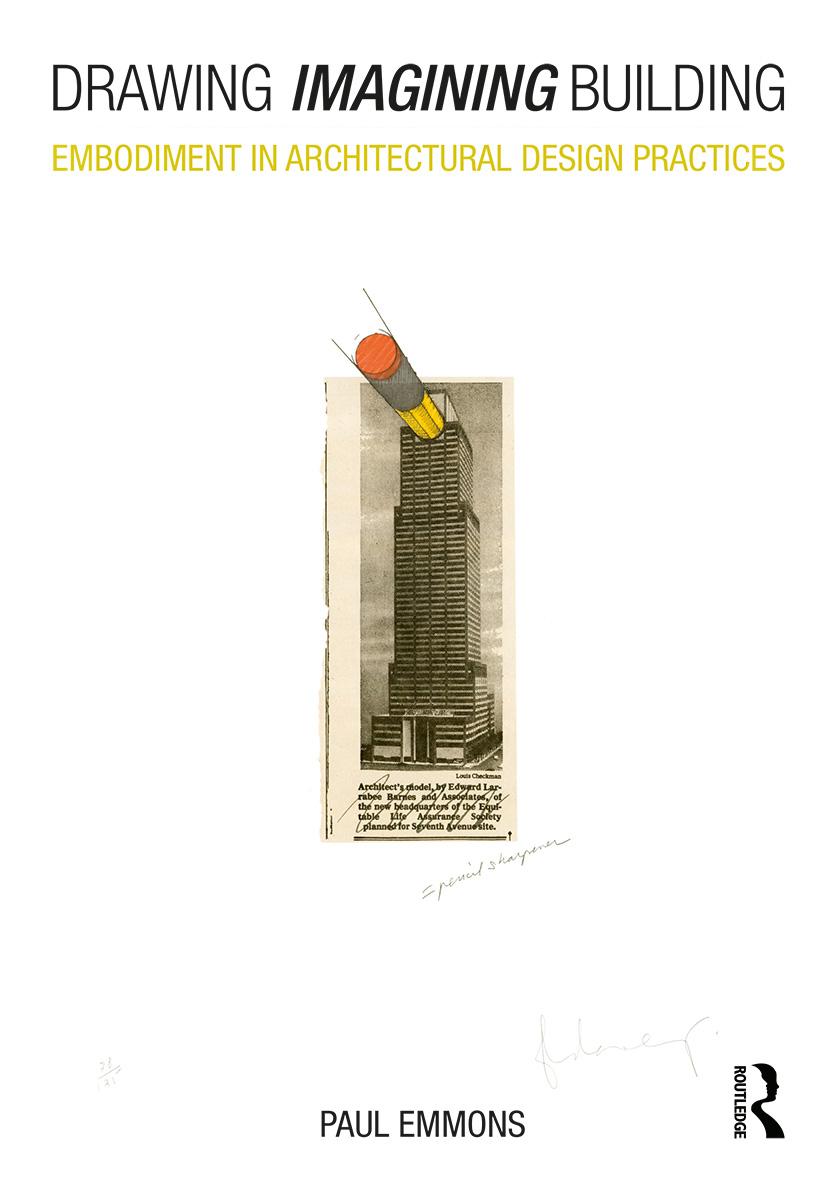
Drawing Imagining Building focuses on the history of hand-drawing practices to capture some of the most crucial and overlooked parts of the process. Using 80 black and white images to illustrate the examples, it examines architectural drawing practices to elucidate the ways drawing advances the architect’s imagination.
Emmons considers drawing practices in the Renaissance and up to the first half of the twentieth century. Combining systematic analysis across time with historical explication presents the development of hand-drawing, while also grounding early modern practices in their historical milieu. Each of the illustrated chapters considers formative aspects of architectural drawing practice, such as upright elevations, flowing lines and occult lines, and drawing scales to identify their roots in an embodied approach to show how hand-drawing contributes to the architect’s productive imagination. By documenting some of the ways of thinking through practices of architectural handdrawing, it describes how practices can enrich the ethical imagination of the architect.
This book would be beneficial for academics, practitioners, and students of architecture, particularly those who are interested in the history and significance of hand-drawing and technical drawing.
Pay easily by card, Klarna, Apple Pay or Google Pay. Not happy? You always have a 14-day money-back guarantee. Read more in our terms. If you have any questions, email us at hello@memmo.org.
Memmo makes studying easier – wherever you are in the world. We bring your course books and smart study tools together in one place: summaries, quizzes, podcasts and flashcards. Plus Ted, your study buddy who answers anything you wonder. Over 50,000 students already study here – built to help you learn faster and stress less.