
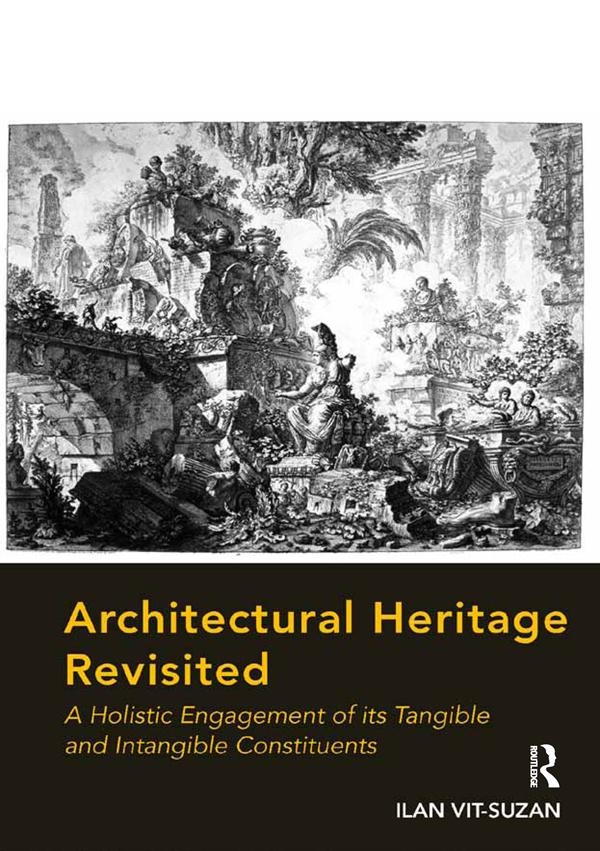
By improving our understanding of how the tangible and intangible dimensions of heritage are correlated, we could develop a relationship with heritage that goes beyond the mere act of conservation. This book argues that we need to recognize the historic monument as a tangible aspect of a holistic expression of culture that is rooted in specific spatio-temporal conditions. However, since the latter are constantly changing, it is vital to identify an implicit contradiction with the goals of conservation. As the intangible dimensions are more dynamic, driven by the transmission, reception, and advancement of knowledge, the reliance of the prevailing treatment of heritage today, conservation, ossifies this relationship. By examining three major heritage monuments - the Pantheon, Teotihuacan's Sun Pyramid and Alhambra - the book shows how these sites are the product of multiple strategies and unforeseen agents, accumulated through history. It emphasizes how these historical trends need to be better understood in order to attain a more 'organic' relationship with heritage and offers some recommendations that should be analyzed in participative processes of deliberation: the Pantheon's continuity could be extended; the Pyramid's loss, accepted; and Alhambra's exclusion, reversed. In this way, the book invites people to engage heritage from a historical understanding that is open to critical reassessment, dialogue, and cooperation.
Pay easily by card, Klarna, Apple Pay or Google Pay. Not happy? You always have a 14-day money-back guarantee. Read more in our terms. If you have any questions, email us at hello@memmo.org.
Memmo makes studying easier – wherever you are in the world. We bring your course books and smart study tools together in one place: summaries, quizzes, podcasts and flashcards. Plus Ted, your study buddy who answers anything you wonder. Over 75,000 students already study here – built to help you learn faster and stress less.
You might also like
Buy the book0