
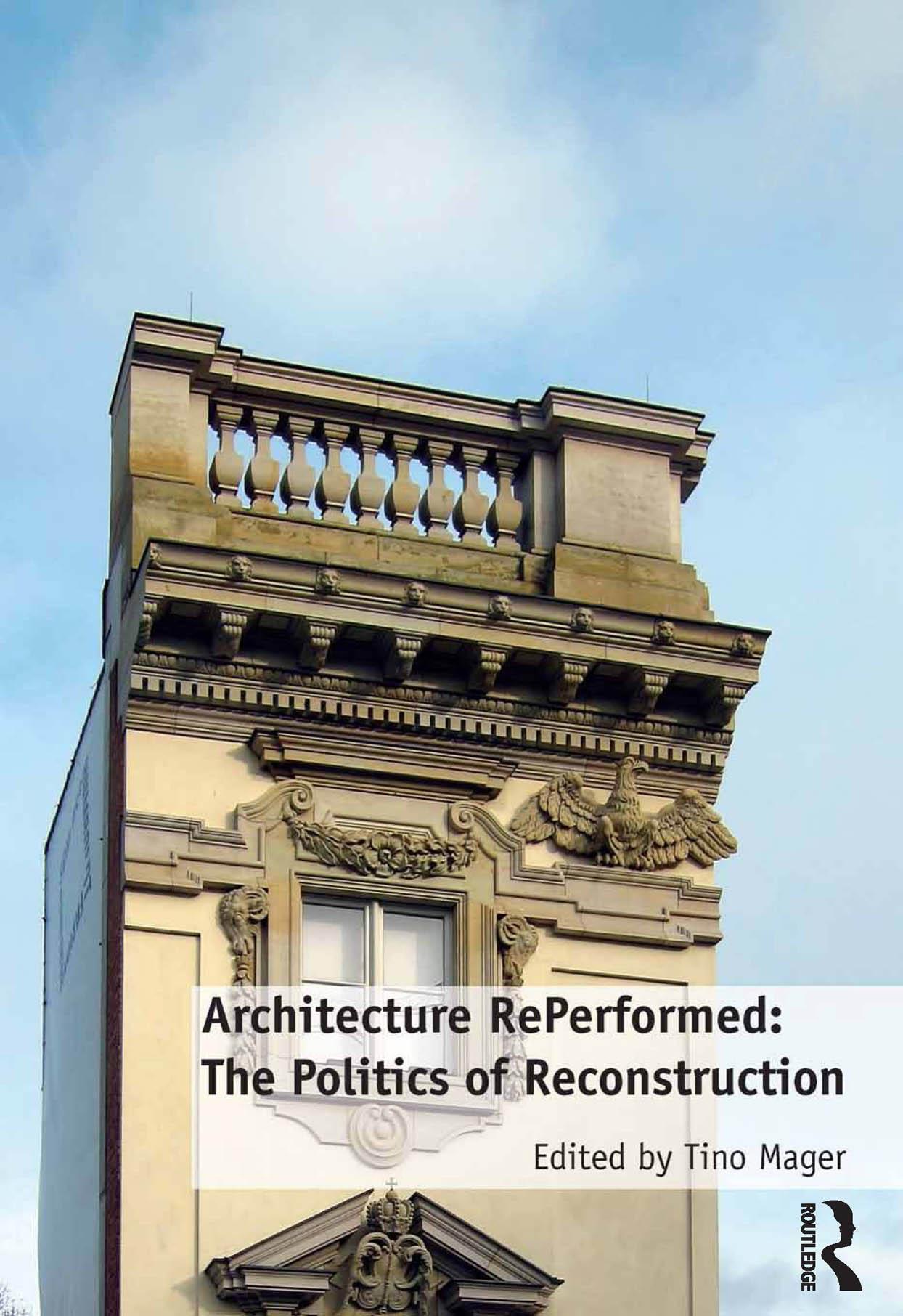
First emerging at the beginning of the twentieth century, architectural reconstruction has increasingly become an instrument to visually revive a long bygone past. This book deals with the phenomenon of meticulous reconstruction in architecture. It argues that the politics of reconstruction go far beyond aesthetic considerations. Taking architecture as a major source of history and regional identity, the impact of large-scale reconstruction is deeply intertwined with political and social factors. Furthermore, memories and associations correlated with lost buildings of a bygone era are heavily influenced by their re-appearance, something which often contradicts historical events. Reconstruction has become an established way of building and dealing with the past, yet so far, there is no comprehensive scientific study on it. By bringing together eight case studies from Eastern Europe, France, Spain, China, Japan, Israel and Brazil, it provides valuable insights into this topic. The chapters analyse the political background of the reconstructions and identify the protagonists. In doing so, this volume adds to our understanding of the impact of reconstruction to memory and oblivion, as well as the critical power of reconstruction regarding contemporary architecture and urbanism.
Pay easily by card, Klarna, Apple Pay or Google Pay. Not happy? You always have a 14-day money-back guarantee. Read more in our terms. If you have any questions, email us at hello@memmo.org.
Memmo makes studying easier – wherever you are in the world. We bring your course books and smart study tools together in one place: summaries, quizzes, podcasts and flashcards. Plus Ted, your study buddy who answers anything you wonder. Over 75,000 students already study here – built to help you learn faster and stress less.
You might also like
Buy the book0