
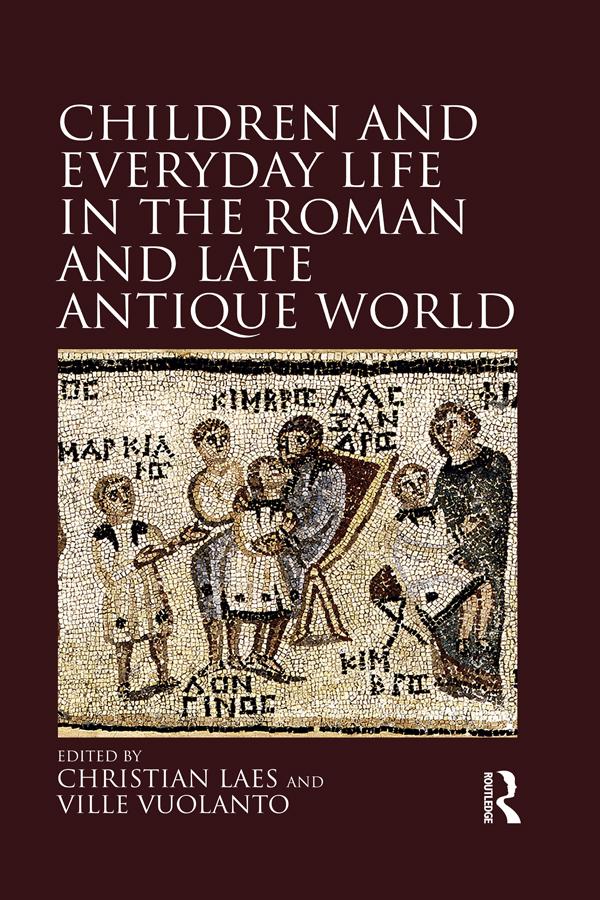
Children and Everyday Life in the Roman and Late Antique World explores what it meant to be a child in the Roman world - what were children’s concerns, interests and beliefs - and whether we can find traces of children’s own cultures. By combining different theoretical approaches and source materials, the contributors explore the environments in which children lived, their experience of everyday life, and what the limits were for their agency. The volume brings together scholars of archaeology and material culture, classicists, ancient historians, theologians, and scholars of early Christianity and Judaism, all of whom have long been involved in the study of the social and cultural history of children.
The topics discussed include children's living environments; clothing; childhood care; social relations; leisure and play; health and disability; upbringing and schooling; and children's experiences of death. While the main focus of the volume is on Late Antiquity its coverage begins with the early Roman Empire, and extends to the early ninth century CE. The result is the first book-length scrutiny of the agency and experience of pre-modern children.
Pay easily by card, Klarna, Apple Pay or Google Pay. Not happy? You always have a 14-day money-back guarantee. Read more in our terms. If you have any questions, email us at hello@memmo.org.
Memmo makes studying easier – wherever you are in the world. We bring your course books and smart study tools together in one place: summaries, quizzes, podcasts and flashcards. Plus Ted, your study buddy who answers anything you wonder. Over 75,000 students already study here – built to help you learn faster and stress less.