
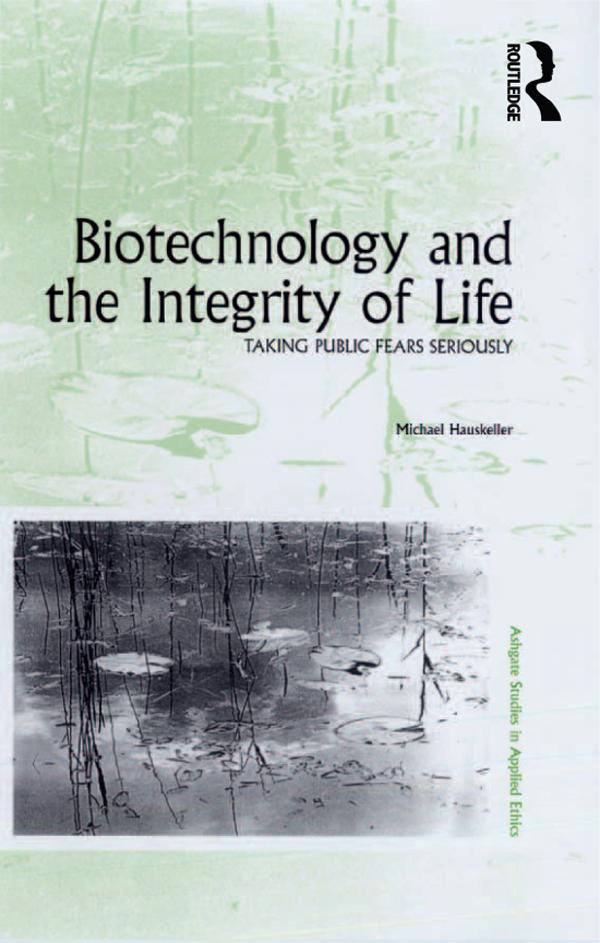
There are things that can be done and are done to life on earth (whether it be human, animal or plant life) which, even if they do not involve or produce any suffering, are still considered morally wrong by a large proportion of the public. Such things include changing the nature of living beings by means of genetic engineering in order to enhance their health, or, more likely with animals and plants, their utility, or impairing their ability to live autonomously, or unduly instrumentalizing them. Yet many scientists are puzzled about the unwillingness of the public to feel much enthusiasm about a technology that, in their view, promises great benefits to humans and does not seem to cause more harm to animals than other practices which most of us do not question at all. In this book Michael Hauskeller takes public fears seriously and offers the idea of 'biological integrity' as a clarifying principle which can then be analyzed to show that seemingly irrational public concerns about genetic engineering are not so irrational after all and that a philosophically sound justification of those concerns can indeed be given.
Pay easily by card, Klarna, Apple Pay or Google Pay. Not happy? You always have a 14-day money-back guarantee. Read more in our terms. If you have any questions, email us at hello@memmo.org.
Memmo makes studying easier – wherever you are in the world. We bring your course books and smart study tools together in one place: summaries, quizzes, podcasts and flashcards. Plus Ted, your study buddy who answers anything you wonder. Over 50,000 students already study here – built to help you learn faster and stress less.
You might also like
Buy the book0