
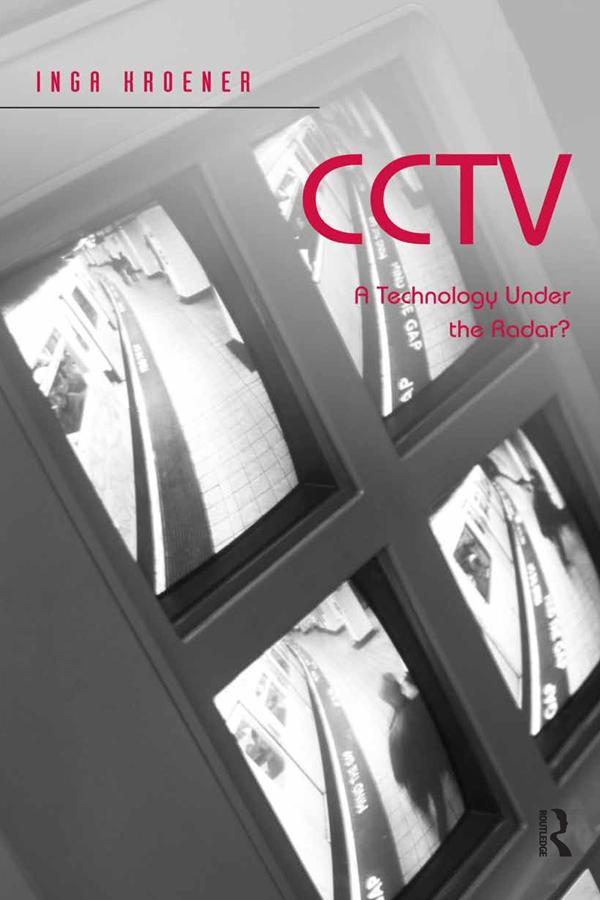
Central state and non-covert surveillance began in earnest at the start of the twentieth century. By the start of the twenty-first century, the UK was one of the most surveilled societies on earth. This groundbreaking volume by Inga Kroener analyses the particular combination of factors that have created this surveillance state. Kroener argues against the inevitability of the rise of CCTV that is so often found in this literature, to map out the early history of CCTV, tracing its development from a tool for education, safety and transport during the 1950s, to one of politics in the 1970s and 1980s, to eventually become a tool of surveillance during the 1990s. Within this analysis, the complex role of the public in 'allowing' the widespread and rapid dissemination of CCTV is discussed and the representation of CCTV in the media is also studied. This volume will be of interest to all scholars working in the fields of surveillance studies; science, technology and society departments; and social historians more generally.
Pay easily by card, Klarna, Apple Pay or Google Pay. Not happy? You always have a 14-day money-back guarantee. Read more in our terms. If you have any questions, email us at hello@memmo.org.
Memmo makes studying easier – wherever you are in the world. We bring your course books and smart study tools together in one place: summaries, quizzes, podcasts and flashcards. Plus Ted, your study buddy who answers anything you wonder. Over 50,000 students already study here – built to help you learn faster and stress less.
You might also like
Buy the book0