
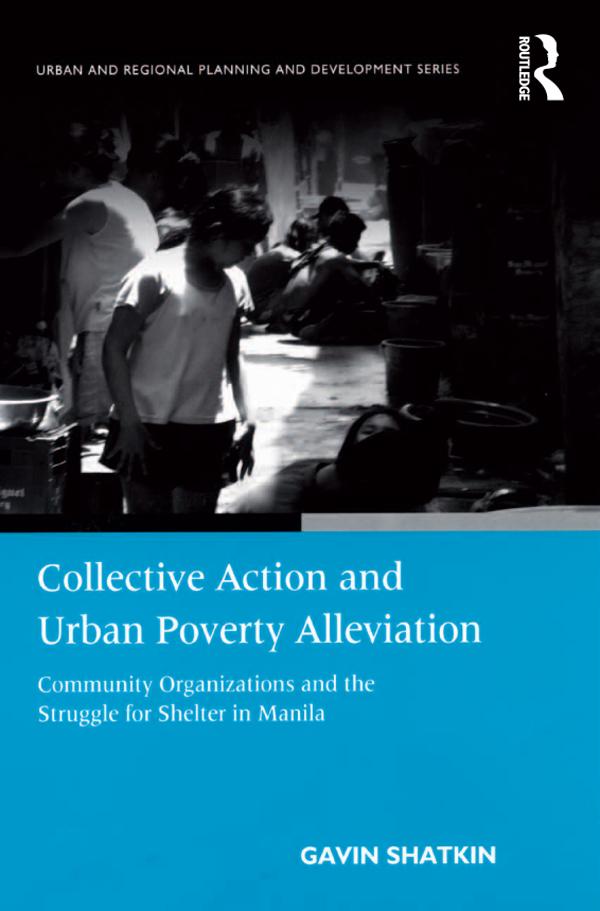
An estimated 600 million people now live in informal or 'squatter' settlements in the rapidly growing cities of the developing world. With such settlements often lacking basic necessities, there is an urgent need to address this urban crisis. Recently, innovative approaches have focused on the role of community-based organizations (CBOs) in setting up self-help and participatory programmes. This incisive book questions whether communities have the ability to organize, engage government and undertake major redevelopment. It also examines when and how mobilization of communities occurs and if such organizations possess any influence in the intensely political decision-making arena of urban land development. It is illustrated by a detailed analysis of the experience of CBOs in Manila, as the Philippine government has undertaken what is perhaps the most radical experiment in decentralized, participatory approaches to urban governance in the world. The book emphasizes the external conditions that influence patterns of collective action within communities and addresses issues such as the local political economy and the communities' place within the global economy.
Pay easily by card, Klarna, Apple Pay or Google Pay. Not happy? You always have a 14-day money-back guarantee. Read more in our terms. If you have any questions, email us at hello@memmo.org.
Memmo makes studying easier – wherever you are in the world. We bring your course books and smart study tools together in one place: summaries, quizzes, podcasts and flashcards. Plus Ted, your study buddy who answers anything you wonder. Over 75,000 students already study here – built to help you learn faster and stress less.
You might also like
Buy the book0