
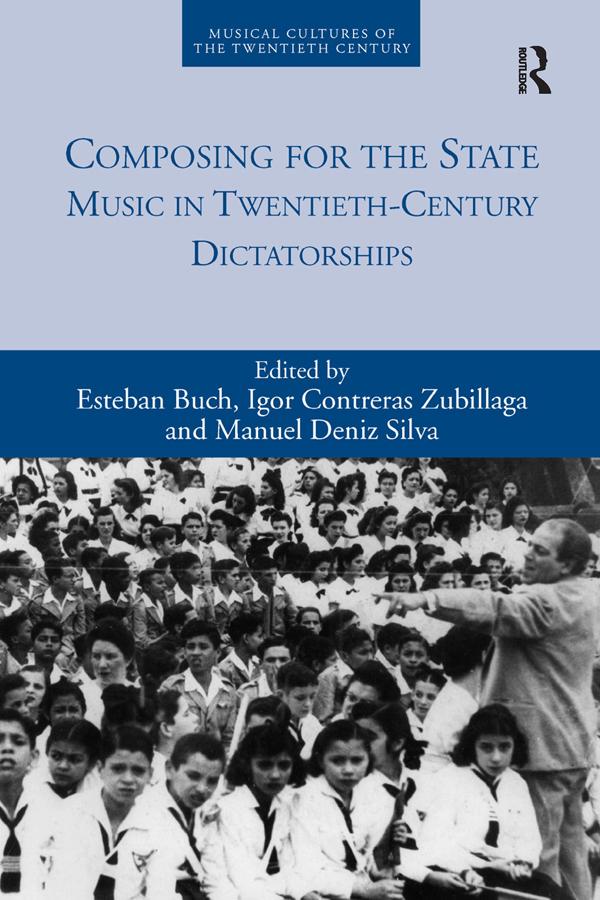
Under the dictatorships of the twentieth century, music never ceased to sound. Even when they did not impose aesthetic standards, these regimes tended to favour certain kinds of art music such as occasional works for commemorations or celebrations, symphonic poems, cantatas and choral settings. In the same way, composers who were more or less ideologically close to the regime wrote pieces of music on their own initiative, which amounted to a support of the political order.
This book presents ten studies focusing on music inspired and promoted by regimes such as Nazi Germany, Fascist Italy, France under Vichy, the USSR and its satellites, Franco's Spain, Salazar's Portugal, Maoist China, and Latin-American dictatorships. By discussing the musical works themselves, whether they were conceived as ways to provide "music for the people", to personally honour the dictator, or to participate in State commemorations of glorious historical events, the book examines the relationship between the composers and the State.
This important volume, therefore, addresses theoretical issues long neglected by both musicologists and historians: What is the relationship between art music and propaganda? How did composers participate in musical life under the control of an authoritarian State? What was specifically political in the works produced in these contexts? How did audiences react to them? Can we speak confidently about "State music"? In this way, Composing for the State: Music in Twentieth Century Dictatorships is an essential contribution to our understanding of musical cultures of the twentieth century, as well as the symbolic policies of dictatorial regimes.
Pay easily by card, Klarna, Apple Pay or Google Pay. Not happy? You always have a 14-day money-back guarantee. Read more in our terms. If you have any questions, email us at hello@memmo.org.
Memmo makes studying easier – wherever you are in the world. We bring your course books and smart study tools together in one place: summaries, quizzes, podcasts and flashcards. Plus Ted, your study buddy who answers anything you wonder. Over 50,000 students already study here – built to help you learn faster and stress less.