
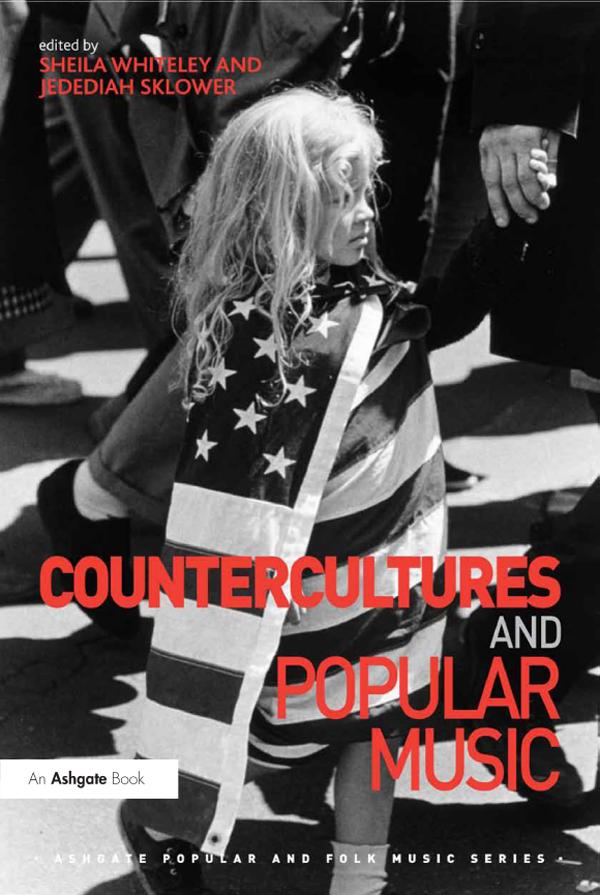
’Counterculture’ emerged as a term in the late 1960s and has been re-deployed in more recent decades in relation to other forms of cultural and socio-political phenomena. This volume provides an essential new academic scrutiny of the concept of ’counterculture’ and a critical examination of the period and its heritage. Recent developments in sociological theory complicate and problematise theories developed in the 1960s, with digital technology, for example, providing an impetus for new understandings of counterculture. Music played a significant part in the way that the counterculture authored space in relation to articulations of community by providing a shared sense of collective identity. Not least, the heady mixture of genres provided a socio-cultural-political backdrop for distinctive musical practices and innovations which, in relation to counterculture ideology, provided a rich experiential setting in which different groups defined their relationship both to the local and international dimensions of the movement, so providing a sense of locality, community and collective identity.
Pay easily by card, Klarna, Apple Pay or Google Pay. Not happy? You always have a 14-day money-back guarantee. Read more in our terms. If you have any questions, email us at hello@memmo.org.
Memmo makes studying easier – wherever you are in the world. We bring your course books and smart study tools together in one place: summaries, quizzes, podcasts and flashcards. Plus Ted, your study buddy who answers anything you wonder. Over 50,000 students already study here – built to help you learn faster and stress less.
You might also like
Buy the book0