
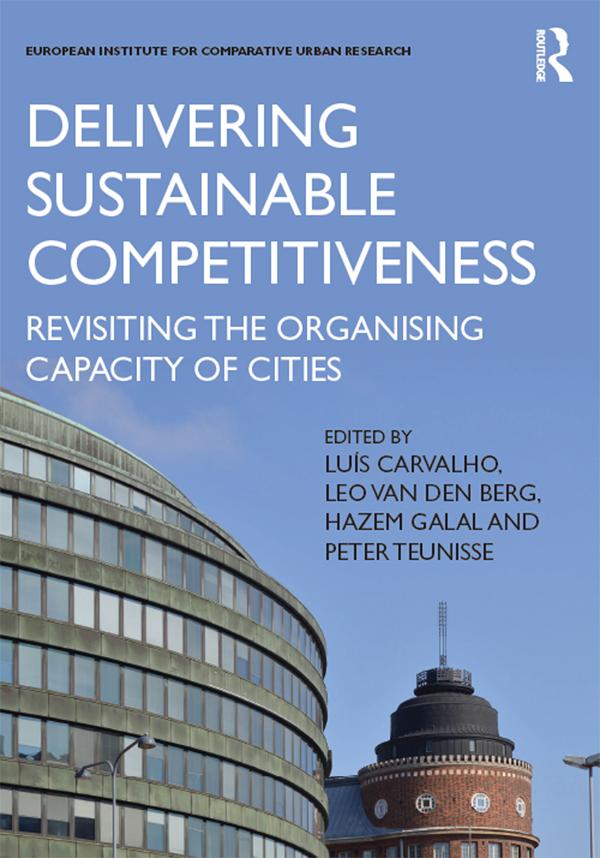
Global trends such as climate change, digitalisation, enhanced concepts of democracy and the consequences of the 2008 financial crisis are changing the playing field of cities across the world. Urban development objectives are shifting away from being purely concerned with wealth creation and competitiveness, to increasingly combining social and environmental dimensions. In this context, how can cities influence and sustain their competitive position over time? Which new types of urban strategies are emerging, and which organising capacities are proving the most important?
This book provides insight into the complex issue of delivering sustainable competitiveness by analysing a number of innovative urban development strategies in context. Questions and topics addressed include: how can new legacies of city events be secured; how can clean technology industries be nurtured through urban regeneration initiatives; and how can the impact of urban safety strategies be enhanced? These and other pivotal questions are explored through close attention to the enabling factors linking ideas with results, such as distributed leadership, collaboration, communication and experimentation. Combining case studies from Europe, Africa, South America and Southeast Asia, the book provides a truly international perspective on the potentials and limitations of a new generation of urban development and competitiveness strategies.
Pay easily by card, Klarna, Apple Pay or Google Pay. Not happy? You always have a 14-day money-back guarantee. Read more in our terms. If you have any questions, email us at hello@memmo.org.
Memmo makes studying easier – wherever you are in the world. We bring your course books and smart study tools together in one place: summaries, quizzes, podcasts and flashcards. Plus Ted, your study buddy who answers anything you wonder. Over 75,000 students already study here – built to help you learn faster and stress less.