
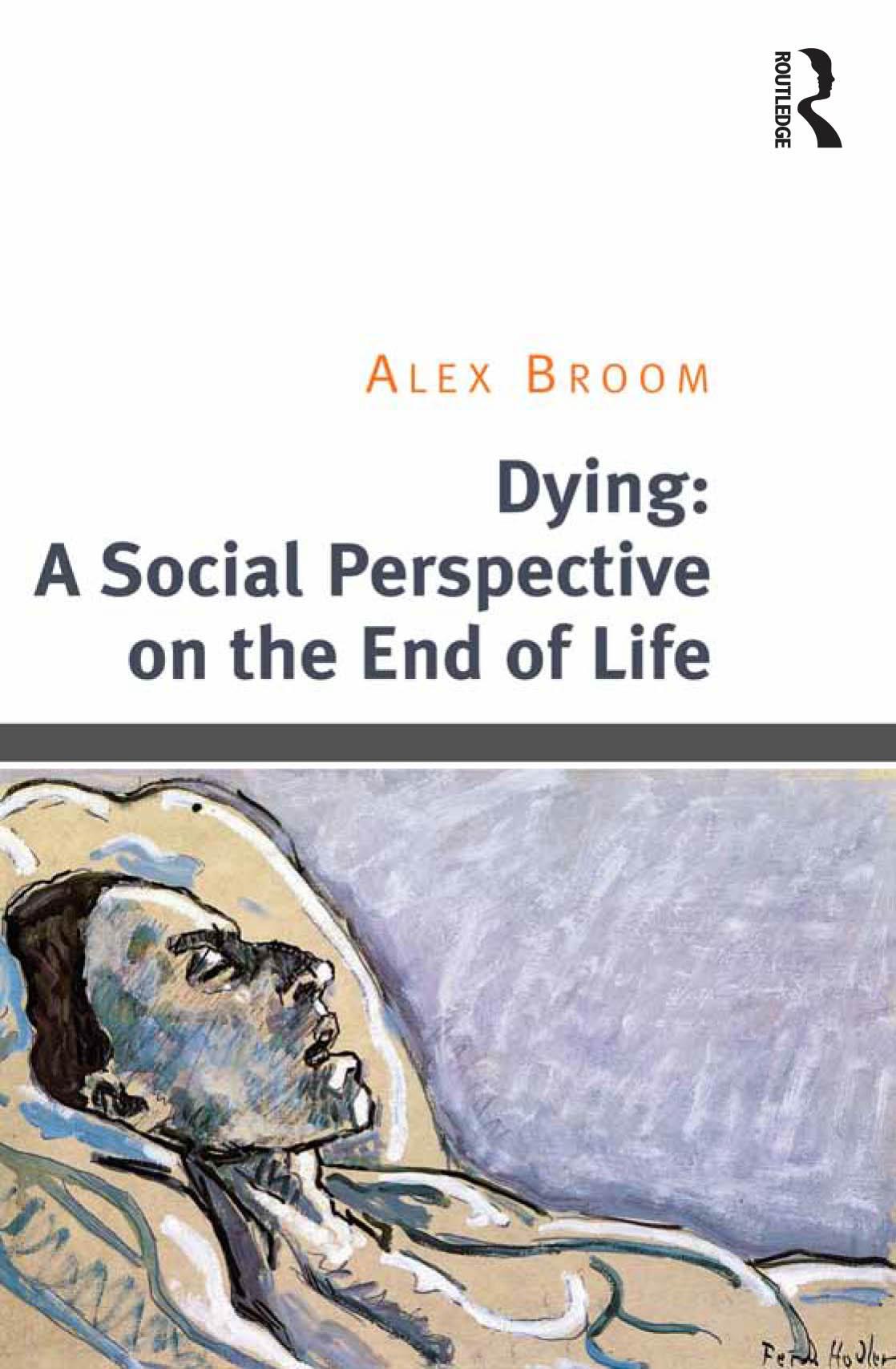
An inevitable and universal experience, dying is experienced by individuals in different ways, often related to the character of our relationships, family structures, gender identities, cultural backgrounds, and economic means. Drawing on extensive qualitative fieldwork with patients, carers and health professionals in Australia and the United Kingdom, Dying: A Social Perspective on the End of Life provides a critical examination of the different spheres of dying, in social and cultural context. Exploring complex issues such as the politics of assisted dying, negotiating medical futility, gender and dying, the desire for redemption, the moralities of 'the good fight' and the lived experience of bodily disintegration, this book links novel theoretical ideas within sociology to cutting-edge empirical data collected in palliative and end-of-life care contexts. A theoretically engaged understanding of the social mediation of the end of life, Dying: A Social Perspective on the End of Life also sheds light on the manner in which the end of life can be shaped by major economic, cultural and socio-cultural shifts including neo-liberalism, individualisation, medicalisation, professionalisation and detraditionalisation. As such, it will appeal to social science, health and medical researchers interested in the end of life, as well as those working in palliative and end-of-life care settings.
Pay easily by card, Klarna, Apple Pay or Google Pay. Not happy? You always have a 14-day money-back guarantee. Read more in our terms. If you have any questions, email us at hello@memmo.org.
Memmo makes studying easier – wherever you are in the world. We bring your course books and smart study tools together in one place: summaries, quizzes, podcasts and flashcards. Plus Ted, your study buddy who answers anything you wonder. Over 50,000 students already study here – built to help you learn faster and stress less.
You might also like
Buy the book0