
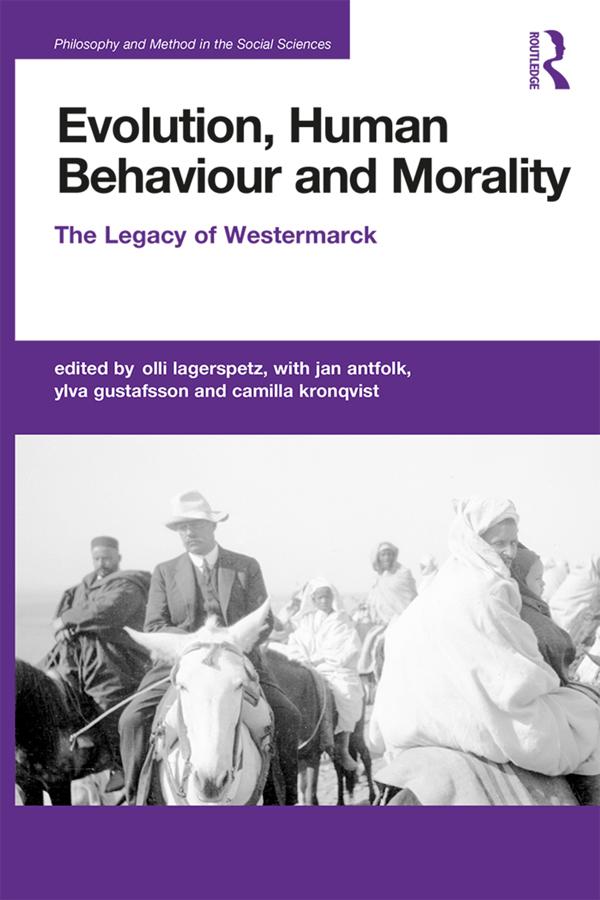
This book highlights the recent re-emergence of Edward Westermarck's work in modern approaches to morality and altruism, examining his importance as one of the founding fathers of anthropology and as a moral relativist, who identified our moral feelings with biologically-evolved retributive emotions.
Questioning the extent to which current debates on the relationship between biology and morality are similar to those in which Westermarck himself was involved, the authors ask what can be learnt from his arguments and from the criticism that he encountered. Drawing on Westermarck's manuscripts and papers as well as his published work, the authors show the importance of situating debates, whether modern or classical, in their correct methodological and philosophical context.
This volume is a rigorous assessment of the ways in which morality is connected with human biological nature. It plays close attention to the development of debates in this field and will appeal to scholars of sociology, anthropology and philosophy.
Pay easily by card, Klarna, Apple Pay or Google Pay. Not happy? You always have a 14-day money-back guarantee. Read more in our terms. If you have any questions, email us at hello@memmo.org.
Memmo makes studying easier – wherever you are in the world. We bring your course books and smart study tools together in one place: summaries, quizzes, podcasts and flashcards. Plus Ted, your study buddy who answers anything you wonder. Over 50,000 students already study here – built to help you learn faster and stress less.