
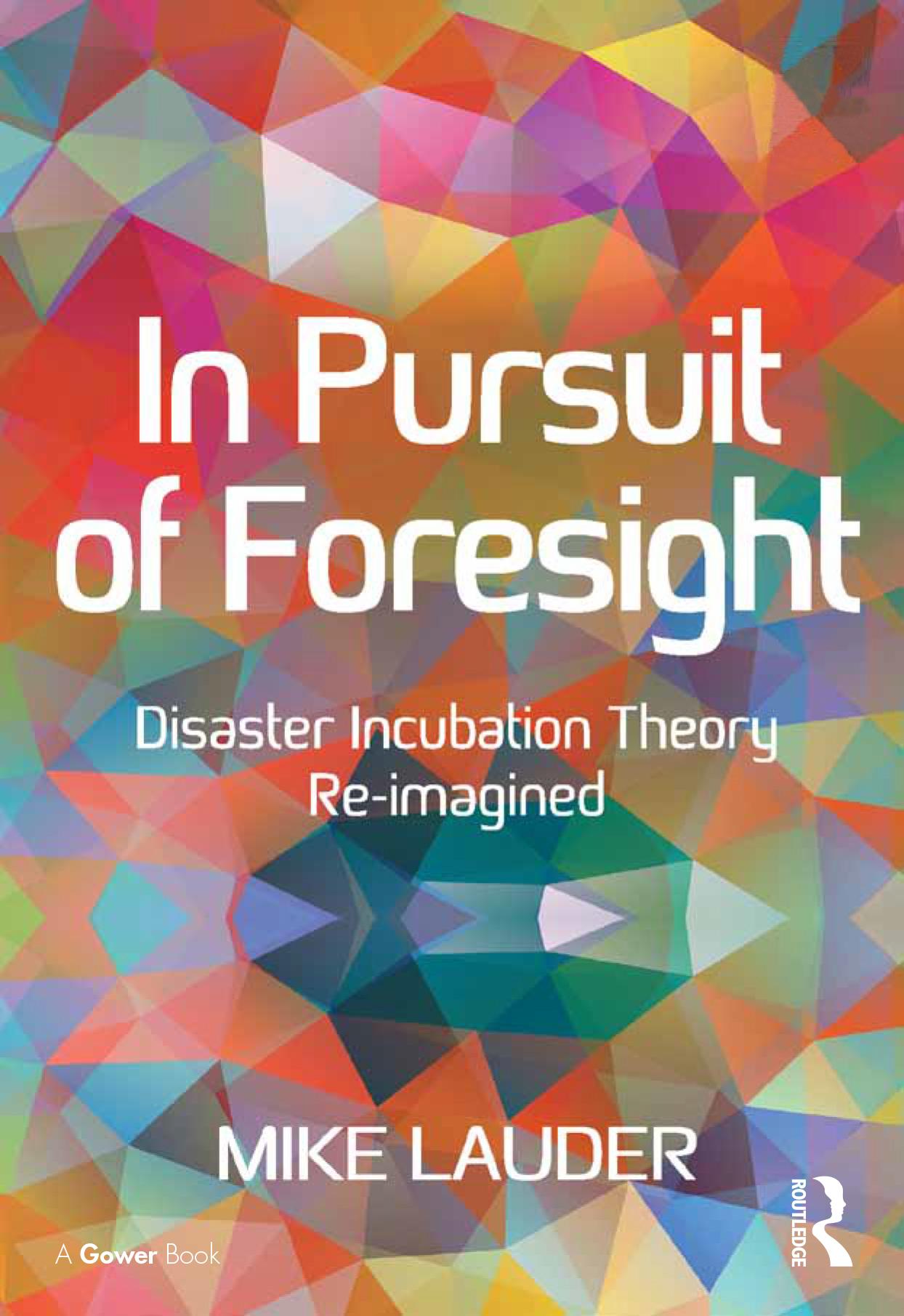
Many inquiry reports blame management for their failures of foresight. These reports are based on the premise that, with a little more thought, these oversights, and so the crisis, would have been avoided. Is it really that simple? The important question is whether, without hindsight, it would have even been possible to identify the actual factors that lead to the failure. This book explores this issue as a practical problem.
The book takes Barry Turner’s Disaster Incubation Theory as its central theme. The first chapter explores the way Turner structured his theory and the way it has been used, before re-imagining it as a way to fostering foresight. The next three chapters examine key issues in detail. They explain why Turner's model was chosen, outline the issues that need to be considered when seeking to prevent such failures and how to use the proposed frameworks. Chapter 5 examines the lessons learnt from this study and, in particular, looks at the mental approach required when seeking such foresight. Finally, Chapter 6 provides a fully worked example. It uses work by Frank Stech who has applied Turner's theory to a past case.
Crises occur everywhere and we continue to struggle to avoid them. In this book Mike Lauder provides executives with thinking tools to help them avoid missing the warning signs of their next crisis.
Pay easily by card, Klarna, Apple Pay or Google Pay. Not happy? You always have a 14-day money-back guarantee. Read more in our terms. If you have any questions, email us at hello@memmo.org.
Memmo makes studying easier – wherever you are in the world. We bring your course books and smart study tools together in one place: summaries, quizzes, podcasts and flashcards. Plus Ted, your study buddy who answers anything you wonder. Over 50,000 students already study here – built to help you learn faster and stress less.