
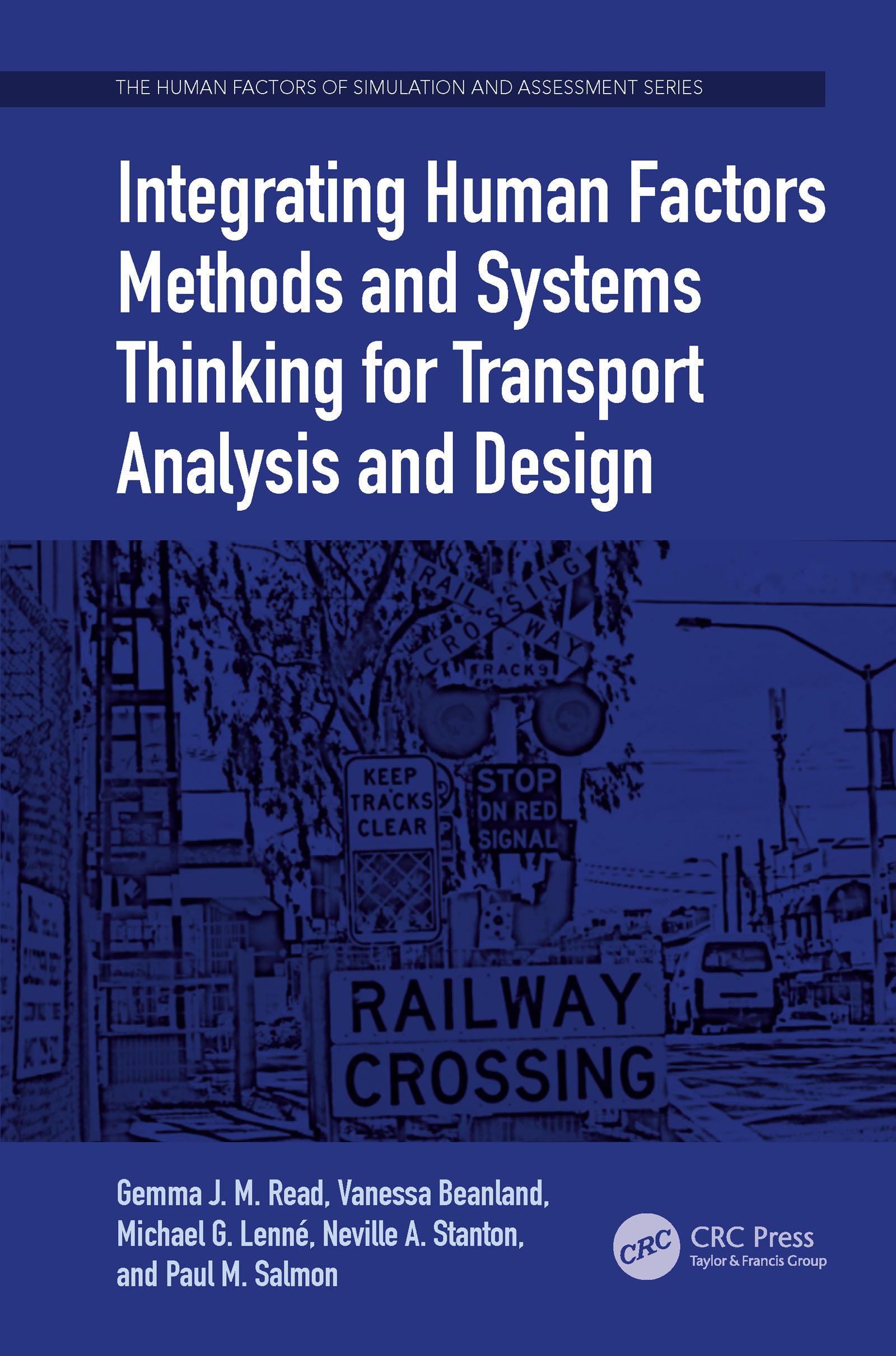
Governments and road safety agencies around the world have either introduced or are considering 'safe system' strategies, a long overdue acknowledgement that different elements of the road system contribute to road safety outcomes. Human factors approaches have a leading role here in both conceptualising the road system as a complex sociotechnical system and in providing practical approaches to support true systems-based countermeasures. This book illustrates the potential for integrating contemporary systems-based human factors methods with modern day driving-assessment methods, such as vehicle instrumentation and driving simulation, to understand and enhance performance in modern day road-transport systems. The book outlines why a fundamental paradigm shift is needed in the way these systems are designed and operated, and illustrates how a wide range of accepted human-factors approaches can be applied successfully to road transport to revolutionise the countermeasure design process. The practical illustrations of these human factors methods are applied to a long-standing road and rail safety issue: rail level crossings, where the road and rail systems intersect. The final chapter of the book highlights the utility of the human factors approach to reducing road trauma and discusses future applications of the approach.
Pay easily by card, Klarna, Apple Pay or Google Pay. Not happy? You always have a 14-day money-back guarantee. Read more in our terms. If you have any questions, email us at hello@memmo.org.
Memmo makes studying easier – wherever you are in the world. We bring your course books and smart study tools together in one place: summaries, quizzes, podcasts and flashcards. Plus Ted, your study buddy who answers anything you wonder. Over 75,000 students already study here – built to help you learn faster and stress less.
You might also like
Buy the book0