
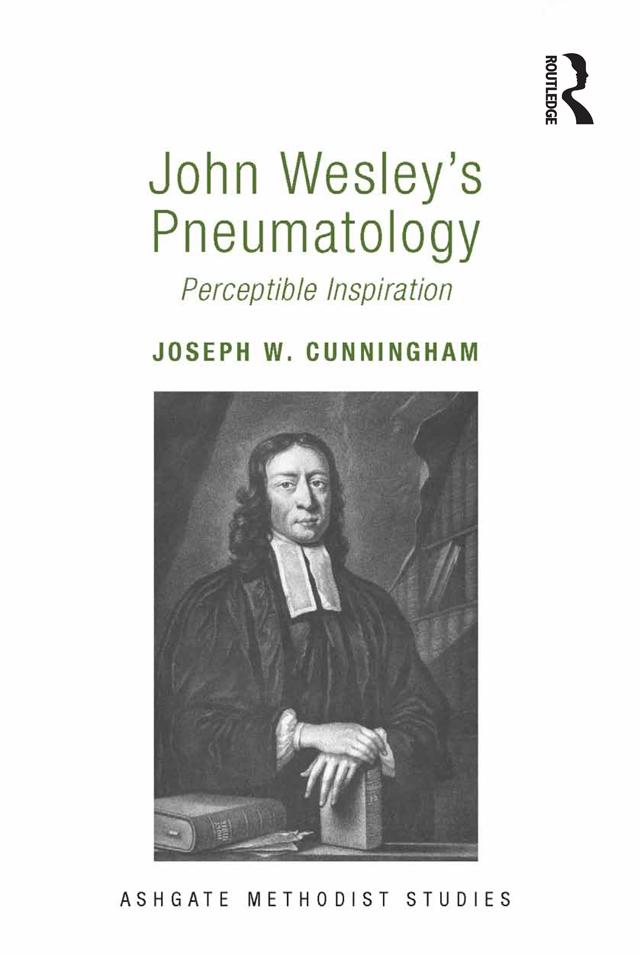
Perceptible inspiration, a term used by John Wesley to describe the complicated relationship between Holy Spirit, religious knowledge, and the nature of spiritual being, is not unlike the term 'Methodist' which was also coined by critics of Methodism during the eighteenth century in Britain. John Wesley's adversaries, especially the pseudonymous John Smith with whom Wesley exchanged letters for a period of three years, frequently challenged the plausibility of direct spiritual sensation, which Wesley defended. What does Wesley mean by perceptible inspiration? What does the teaching reveal about the nature and existence of God in Wesley's thinking? What does it suggest about the spiritual nature of humankind? In John Wesley's Pneumatology, it is argued that 'perceptible inspiration' more than a sidebar of Methodist thought, offers a useful model for considering the various features of Wesley's views on the work of the Spirit in relation to human existence, participatory religious knowledge, and moral theology.
Pay easily by card, Klarna, Apple Pay or Google Pay. Not happy? You always have a 14-day money-back guarantee. Read more in our terms. If you have any questions, email us at hello@memmo.org.
Memmo makes studying easier – wherever you are in the world. We bring your course books and smart study tools together in one place: summaries, quizzes, podcasts and flashcards. Plus Ted, your study buddy who answers anything you wonder. Over 50,000 students already study here – built to help you learn faster and stress less.
You might also like
Buy the book0