
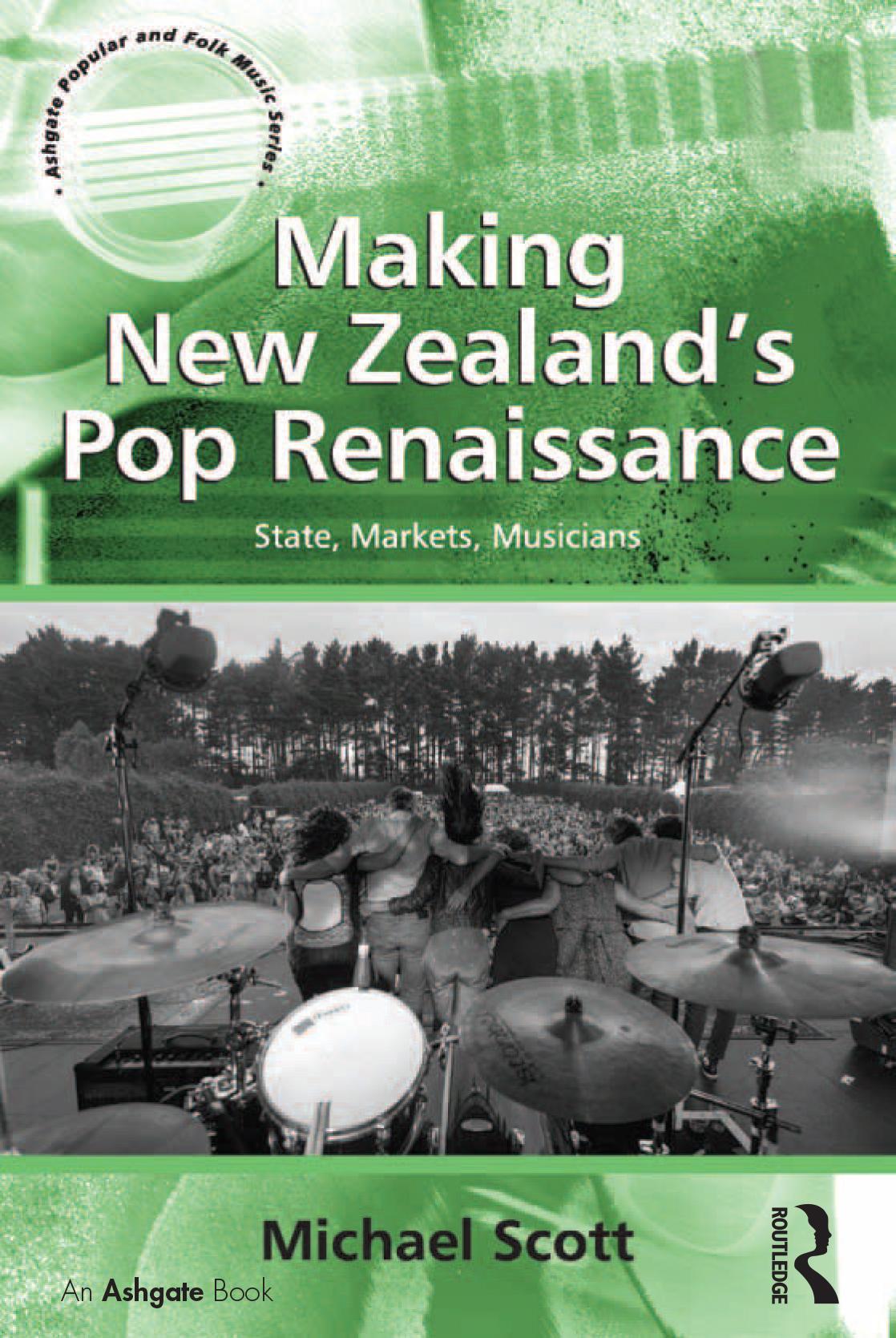
Since the early 2000s New Zealand has undergone a pop renaissance. Domestic artists' sales, airplay and concert attendance have all grown dramatically while new avenues for 'kiwi' pop exports emerged. Concurrent with these trends was a new collective sentiment that embraced and celebrated domestic musicians. In Making New Zealand's Pop Renaissance, Michael Scott argues that this revival arose from state policies and shows how the state built market opportunities for popular musicians through public-private partnerships and organizational affinity with existing music industry institutions. New Zealand offers an instructive case for the ways in which 'after neo-liberal' states steer and co-ordinate popular culture into market exchange by incentivizing cultural production. Scott highlights how these music policies were intended to address various economic and social problems. Arriving with the creative industries' discourse and policy making, politicians claimed these expanded popular music supports would facilitate sustainable employment and a sense of national identity. Yet popular music as economic and social policy presents a paradox: the music industry generates commercial failure and thus requires a large unattached pool of potential talent. Considering this feature, Scott analyses how state programs induced an informal economy of proto-pop production aimed at accessing competitive state funding while simultaneously encouraging musicians to adopt entrepreneurial subjectivities. In doing so he argues New Zealand's music policies are a form of social policy that unintentionally deploy hierarchical structures to foster social inclusion amongst growing numbers of creative workers.
Pay easily by card, Klarna, Apple Pay or Google Pay. Not happy? You always have a 14-day money-back guarantee. Read more in our terms. If you have any questions, email us at hello@memmo.org.
Memmo makes studying easier – wherever you are in the world. We bring your course books and smart study tools together in one place: summaries, quizzes, podcasts and flashcards. Plus Ted, your study buddy who answers anything you wonder. Over 50,000 students already study here – built to help you learn faster and stress less.
You might also like
Buy the book0