
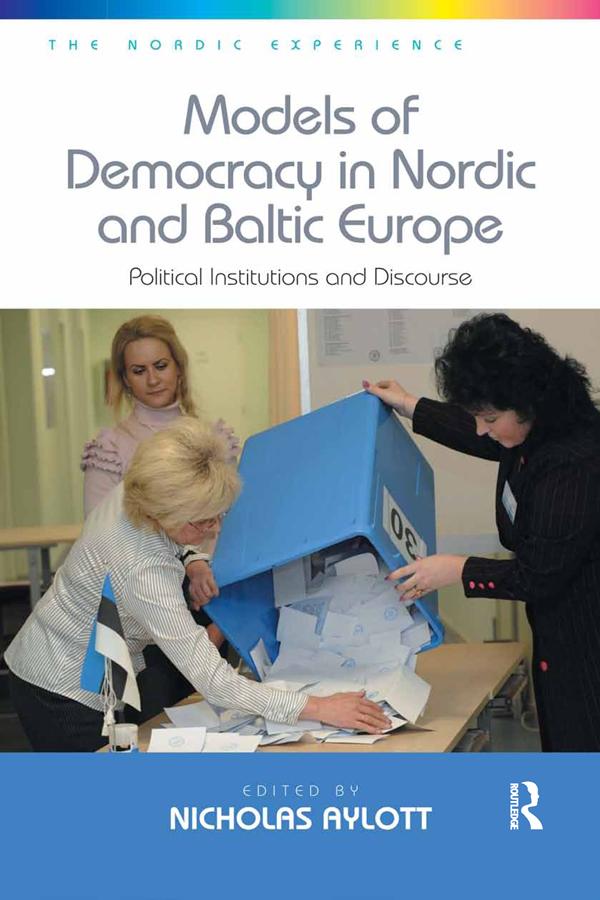
This book explores the ways in which representative democracy works in two neighbouring collections of European states: the Nordic (Denmark, Finland, Iceland, Norway and Sweden) and the Baltic (Estonia, Latvia and Lithuania). Starting from a Nordic vantage point, contributors explore the extent to which aspects of politics function similarly or dissimilarly across the two groups of democratic states, acknowledging the differences in models of democracy that occur within each group. Authors explore the possibility that some of the apparently successful institutional features of Nordic politics have somehow influenced politics in the Baltic states, despite the considerable contextual differences between the two groups. The Nordic-Baltic comparison is particularly worthy of study, given the comparative stability of the Nordic democracies and the half century of occupation by a totalitarian dictatorship that the Baltic states endured. The central, guiding questions are: how does political representation work in countries that have a lot in common, but also a few significant contextual dissimilarities; and what, if any, relationships between the respective styles of democracy can be identified? Using a variety of theories, perspectives and methods, the empirical studies that populate the book seek to offer reflections on these questions.
Pay easily by card, Klarna, Apple Pay or Google Pay. Not happy? You always have a 14-day money-back guarantee. Read more in our terms. If you have any questions, email us at hello@memmo.org.
Memmo makes studying easier – wherever you are in the world. We bring your course books and smart study tools together in one place: summaries, quizzes, podcasts and flashcards. Plus Ted, your study buddy who answers anything you wonder. Over 50,000 students already study here – built to help you learn faster and stress less.
You might also like
Buy the book0