
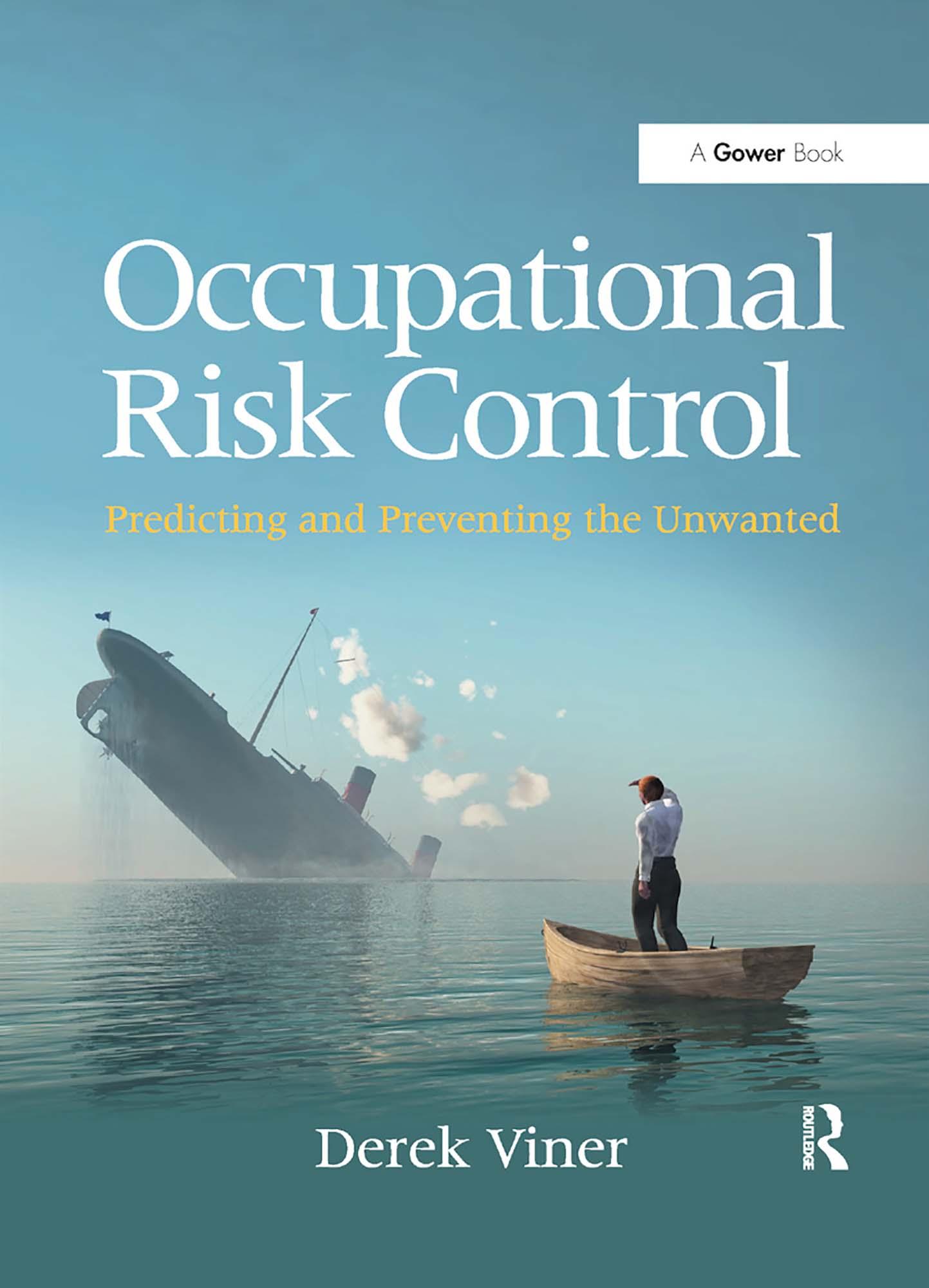
Occupational Risk Control contains a practical theory of risk based on the principles of the physical sciences. The book provides details of the implications of such theory for real-world practice that will be of value to the legislator, general or specialist risk engineer, scientist, academic, student, risk/safety practitioners as well as managers of industrial or commercial undertakings.
The contents are a result of over 40 years of experience in researching, teaching and consulting. The theoretical base is relevant peer-reviewed physical sciences literature. Such literature points out the necessity of understanding the principles that enable processes resulting in damage and loss to be explained and it enables the risk arising from the uncertainty of these processes to be objectively defined, described as well as estimated using real number values. Of these principles and their applications a student once remarked “this should be compulsory study for all engineering students”.
A critical assessment of the pervasive but unscientific accident terminology is included to assist the reader to reflect on the value of this. In a field in which there is a plethora of commercial and pseudo-academic practical tools based on accident theory, this text provides a foundation for the thinking academic and practitioner to critically evaluate the meaning, scope and value of such tools.
The text has chapters on accident theory, damage process models, risk, risk estimation, risk control, risk evaluation, the classification and analysis of risks, risk numeracy, the management of risks in general and the management of technical risks in particular. There are notes on accident investigation and the role of the risk adviser. A substantial glossary of terms is included.
The text is supported by a dedicated web site (www.derekviner.com) which contains discussion and examples of topics as well as a blog.
Pay easily by card, Klarna, Apple Pay or Google Pay. Not happy? You always have a 14-day money-back guarantee. Read more in our terms. If you have any questions, email us at hello@memmo.org.
Memmo makes studying easier – wherever you are in the world. We bring your course books and smart study tools together in one place: summaries, quizzes, podcasts and flashcards. Plus Ted, your study buddy who answers anything you wonder. Over 50,000 students already study here – built to help you learn faster and stress less.