
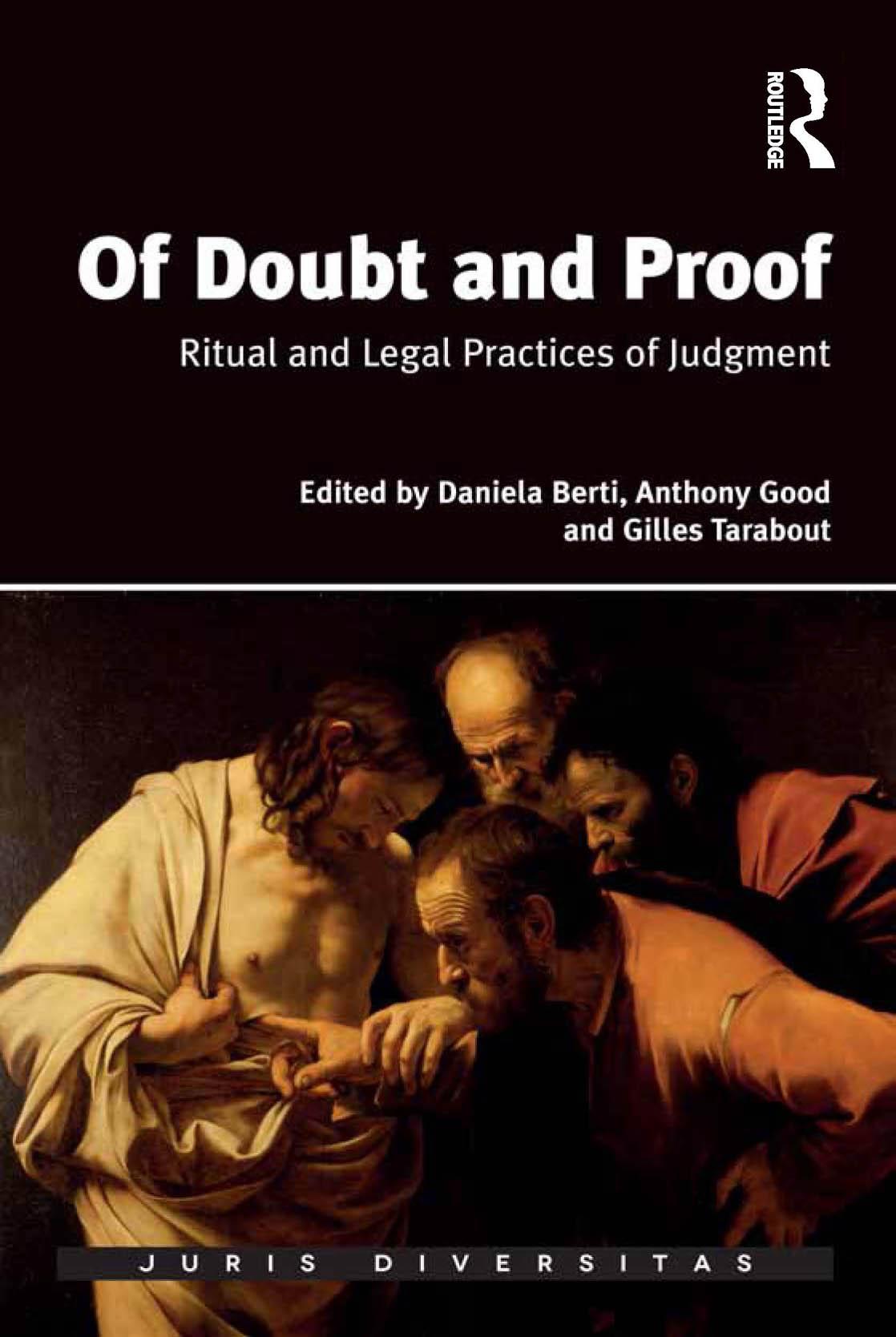
All institutions concerned with the process of judging - whether it be deciding between alternative courses of action, determining a judge’s professional integrity, assigning culpability for an alleged crime, or ruling on the credibility of an asylum claimant - are necessarily directly concerned with the question of doubt. By putting ritual and judicial settings into comparative perspective, in contexts as diverse as Indian and Taiwanese divination and international cricket, as well as legal processes in France, the UK, India, Denmark, and Ghana, this book offers a comprehensive and novel perspective on techniques for casting and dispelling doubt, and the roles they play in achieving verdicts or decisions that appear both valid and just. Broadening the theoretical understandings of the social role of doubt, both in social science and in law, the authors present these understandings in ways that not only contribute to academic knowledge but are also useful to professionals and other participants engaged in the process of judging. This collection will consequently be of great interest to academics researching in the fields of legal anthropology, ritual studies, legal sociology, criminology, and socio-legal studies.
Pay easily by card, Klarna, Apple Pay or Google Pay. Not happy? You always have a 14-day money-back guarantee. Read more in our terms. If you have any questions, email us at hello@memmo.org.
Memmo makes studying easier – wherever you are in the world. We bring your course books and smart study tools together in one place: summaries, quizzes, podcasts and flashcards. Plus Ted, your study buddy who answers anything you wonder. Over 50,000 students already study here – built to help you learn faster and stress less.
You might also like
Buy the book0