
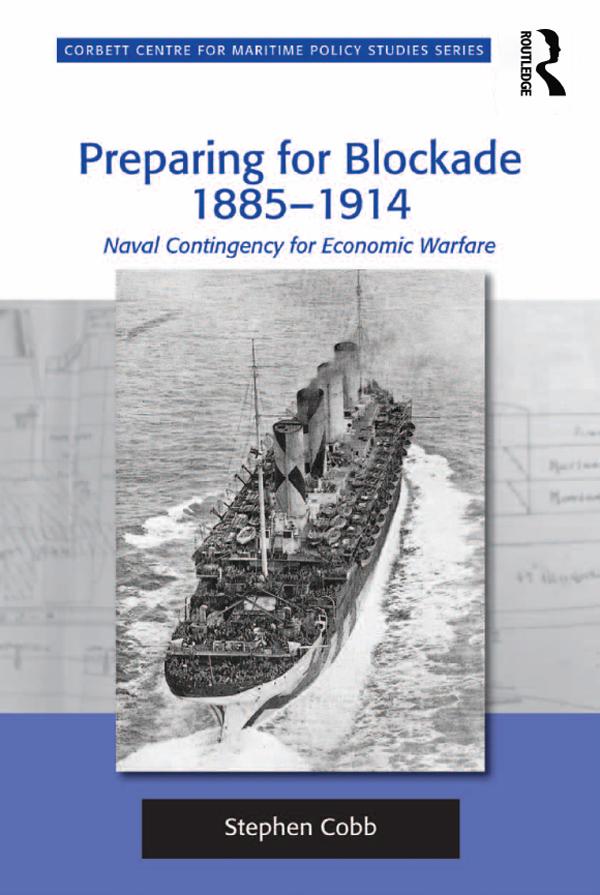
Today, the First World War is remembered chiefly for the carnage of the Western Front, but at the time the Royal Navy's blockade of Germany was a more frequent source of debate. For, even at a time of war, there were influential voices in Britain who baulked at a concept of economic warfare that hindered the free passage of goods on the high seas, and brought German society to the brink of famine. To further our understanding of these issues, this book looks at the background to the blockade, and the effects of its implementation in 1914. It argues that there was a widely shared, but largely unwritten, strategic culture within British naval circles which accepted that in a war with a major maritime power the British response would be to attack enemy trade. This is demonstrated by the fact that from at least the late 1880s the Royal Navy planned for the use of armed merchantmen to enforce an economic blockade of an enemy. This it did by entering into detailed arrangements with major British shipping companies for the design and subsidy of liners with the potential for use as merchant cruisers, and stockpiling their prospective armament. In line with the contemporary, Corbettian, view that seapower depends upon free communications, the book concludes by asserting that the primary role of the Grand Fleet in the First World War was to guarantee the ability of the merchant cruisers on the Northern Patrol to interdict German seaborne trade, rather than to engage in large set-piece battles.
Pay easily by card, Klarna, Apple Pay or Google Pay. Not happy? You always have a 14-day money-back guarantee. Read more in our terms. If you have any questions, email us at hello@memmo.org.
Memmo makes studying easier – wherever you are in the world. We bring your course books and smart study tools together in one place: summaries, quizzes, podcasts and flashcards. Plus Ted, your study buddy who answers anything you wonder. Over 50,000 students already study here – built to help you learn faster and stress less.
You might also like
Buy the book0