
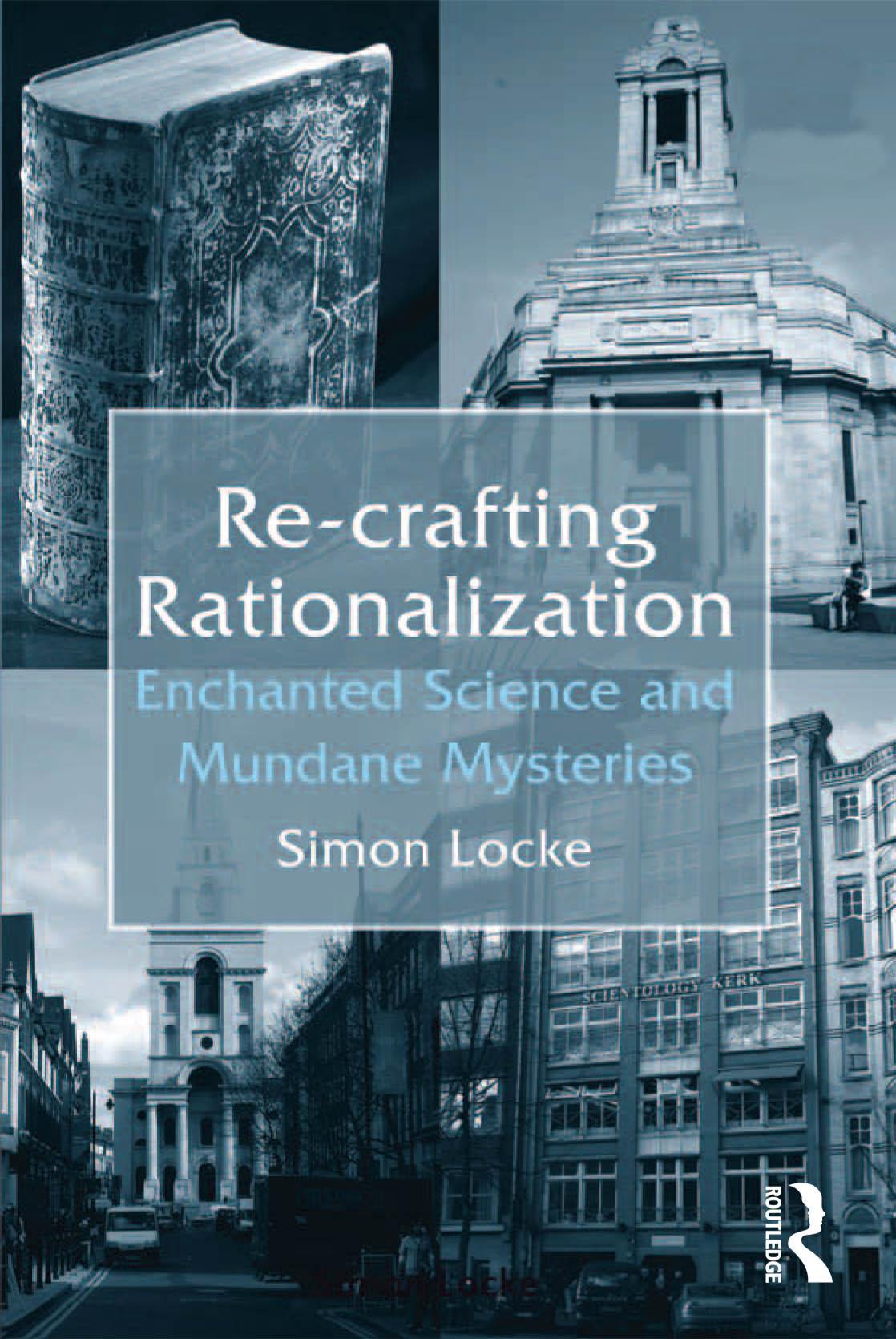
Re-crafting Rationalization contributes to debates relating to the public understanding of science, regarding the conceptualization of the relationship between 'science' and 'the public'. It challenges the prevailing science-centred or 'top-down' framework that currently informs notions of 'public engagement' and 'knowledge-transfer', offering an alternative that remains firmly grounded in the discourse of classical social theory. By proposing an alternative version of rationalization to the standard interpretation of Weber's disenchantment thesis, this book establishes the public understanding of science as a matter of fundamental sociological concern. As such, it redefines this field to emphasize public meanings of science, engaging with a range of topics of major interest to the public and popular meaning of science, including science and religion, science fiction and fantasy, 'fringe' science and media representations of science. Combining rhetorical analysis with ethnomethodology and membership categorization analysis, the book outlines the basis of a new approach to the sociology of knowledge, in the light of which Weber's rationalization thesis is radically re-crafted in relation to studies of scientists' discourse, the rhetoric of science popularization and public usages of science. This re-crafted rationalization is applied in a series of detailed empirical studies of enchanted science (creationism and intelligent design, Scientology and reflexive spirituality, superhero comics) and mundane mysteries (Fortean discourse, conspiracy theory and media representations of 'the scientist' in the case of Jack the Ripper). Re-crafting Rationalization therefore redresses a significant shortcoming in contemporary social theory, which currently overlooks or misrepresents important public meanings of science, whilst excluding popular culture from attention. With profound implications for the ways in which we make sense of developments involving science, this book will be of interest not only to sociologists and social theorists, but also to those interested in popular culture and subcultures and the history, philosophy and sociology of science.
Pay easily by card, Klarna, Apple Pay or Google Pay. Not happy? You always have a 14-day money-back guarantee. Read more in our terms. If you have any questions, email us at hello@memmo.org.
Memmo makes studying easier – wherever you are in the world. We bring your course books and smart study tools together in one place: summaries, quizzes, podcasts and flashcards. Plus Ted, your study buddy who answers anything you wonder. Over 50,000 students already study here – built to help you learn faster and stress less.
You might also like
Buy the book0