
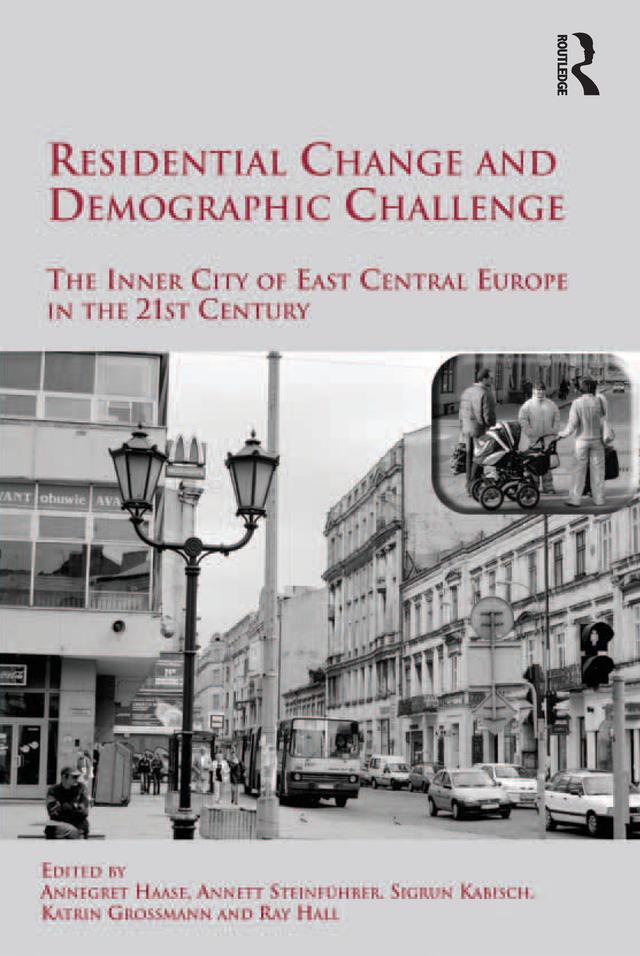
Going beyond the assumption that East Central European cities are still 'in transition' this book draws on the postsocialism paradigm to ask new questions about the impact of demographic change on residential developments in this region. Focussing on four second-order cities in this region, it examines Gdansk and Lódz in Poland and Brno and Ostrava in the Czech Republic as examples and deals with the nexus between urban development and demographic change for the context of East Central European cities. It provides a framework for linking urban and demographic research. It discusses how residential areas and urban developments cope with changes in population development, household types and different forms of in- and out-migration and goes on to explore parallels and differences in comparison with broader European patterns. This book will be useful to academics of urban planning and development especially in transition areas, Central and Eastern European studies, demographics and population studies, and sociology/social exclusion.
Pay easily by card, Klarna, Apple Pay or Google Pay. Not happy? You always have a 14-day money-back guarantee. Read more in our terms. If you have any questions, email us at hello@memmo.org.
Memmo makes studying easier – wherever you are in the world. We bring your course books and smart study tools together in one place: summaries, quizzes, podcasts and flashcards. Plus Ted, your study buddy who answers anything you wonder. Over 75,000 students already study here – built to help you learn faster and stress less.
You might also like
Buy the book0