
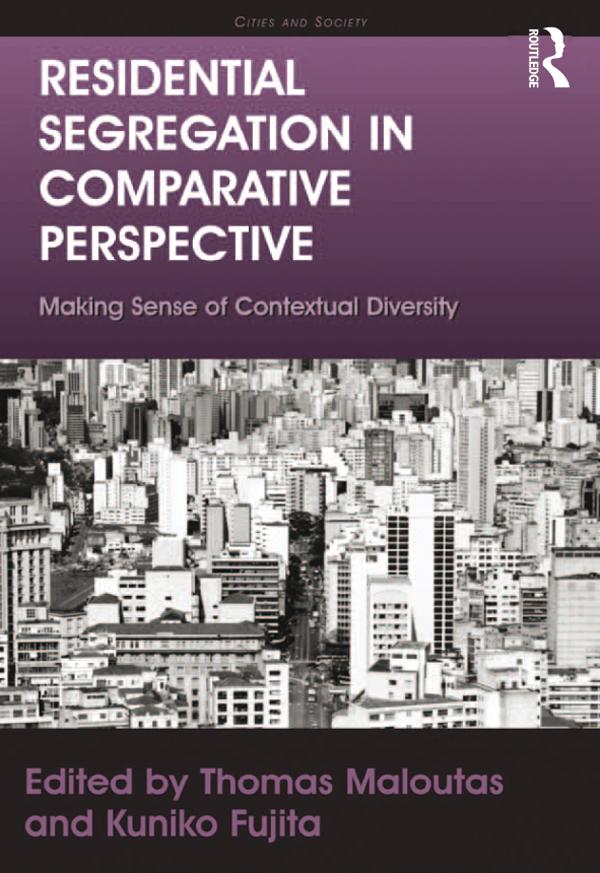
We know very little about variations in urban class and ethnic segregation among nations and even less about differences among cities in different regions of the world. Spatial organization (places and neighbourhoods) matters significantly in some cities in reproducing class relations and ethno-racial hierarchies, but may be much less important in others. The degree and the impact of segregation depend upon contextual diversity. By emphasizing the importance of contextual diversity in the study of urban residential segregation, the book questions currently popular urban theories such as global city, neoliberal urbanism, and gentrification. These theories tend to dissociate cities from their national and regional context and thus ignore their history, culture, politics and institutions. The aim of this book is to introduce the significantly different urban experiences in social and spatial segregation patterns and rationales which exist among the world's regions and to demonstrate that urban theory needs to draw systematically upon this wide range of experiences. The cities selected (Athens, Beijing, Budapest, Copenhagen, Hong Kong, Madrid, Paris, São Paulo, Taipei, and Tokyo) were chosen in order to achieve geographical spread, to maximise the diversity of types of socioeconomic regulation.This volume is thus able to avoid the interpretative limitations and misconstructions resulting from universalizing the Anglo-American experience.
Pay easily by card, Klarna, Apple Pay or Google Pay. Not happy? You always have a 14-day money-back guarantee. Read more in our terms. If you have any questions, email us at hello@memmo.org.
Memmo makes studying easier – wherever you are in the world. We bring your course books and smart study tools together in one place: summaries, quizzes, podcasts and flashcards. Plus Ted, your study buddy who answers anything you wonder. Over 75,000 students already study here – built to help you learn faster and stress less.
You might also like
Buy the book0