
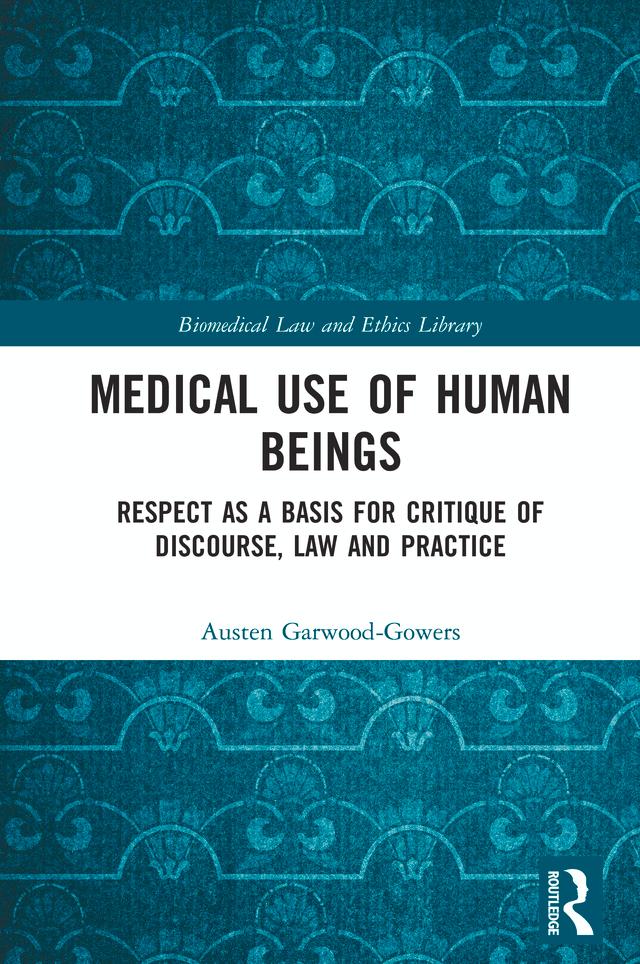
Whilst activities like transplantation and medical research have typically been considered on a discrete basis, they are also actually part of a broader phenomenon of medical means being employed to make use of human beings. This book is the first ever systematic critique of such medical use of the human being as a whole. It is divided into two parts. The first part considers what constitutes an appropriate normative lens through which to view such medical use and its constraint. It makes a reasoned ethical and human-rights-based case for preferring respect for human worth over any of the main alternative approaches that have been drawn on in specific contexts and outlines what this preference practically implies. The second part uses this respect-based lens to critique use discourse, law and practice. Drawing on three contrasting case study areas of warfare-related medical use, transplantation and human tissue research, this book exposes both the context-specific and thematic nature of shortfalls in respect.
Overall this book provides a compelling analysis of how medical use ought to be constrained and a compelling critique of the excesses of discourse, practice and governance. It is recommended to academics, students, policymakers and professionals whose work is focused on or intersects with the medical sector and anyone else with an interest in medicine and its limits.
Pay easily by card, Klarna, Apple Pay or Google Pay. Not happy? You always have a 14-day money-back guarantee. Read more in our terms. If you have any questions, email us at hello@memmo.org.
Memmo makes studying easier – wherever you are in the world. We bring your course books and smart study tools together in one place: summaries, quizzes, podcasts and flashcards. Plus Ted, your study buddy who answers anything you wonder. Over 50,000 students already study here – built to help you learn faster and stress less.