
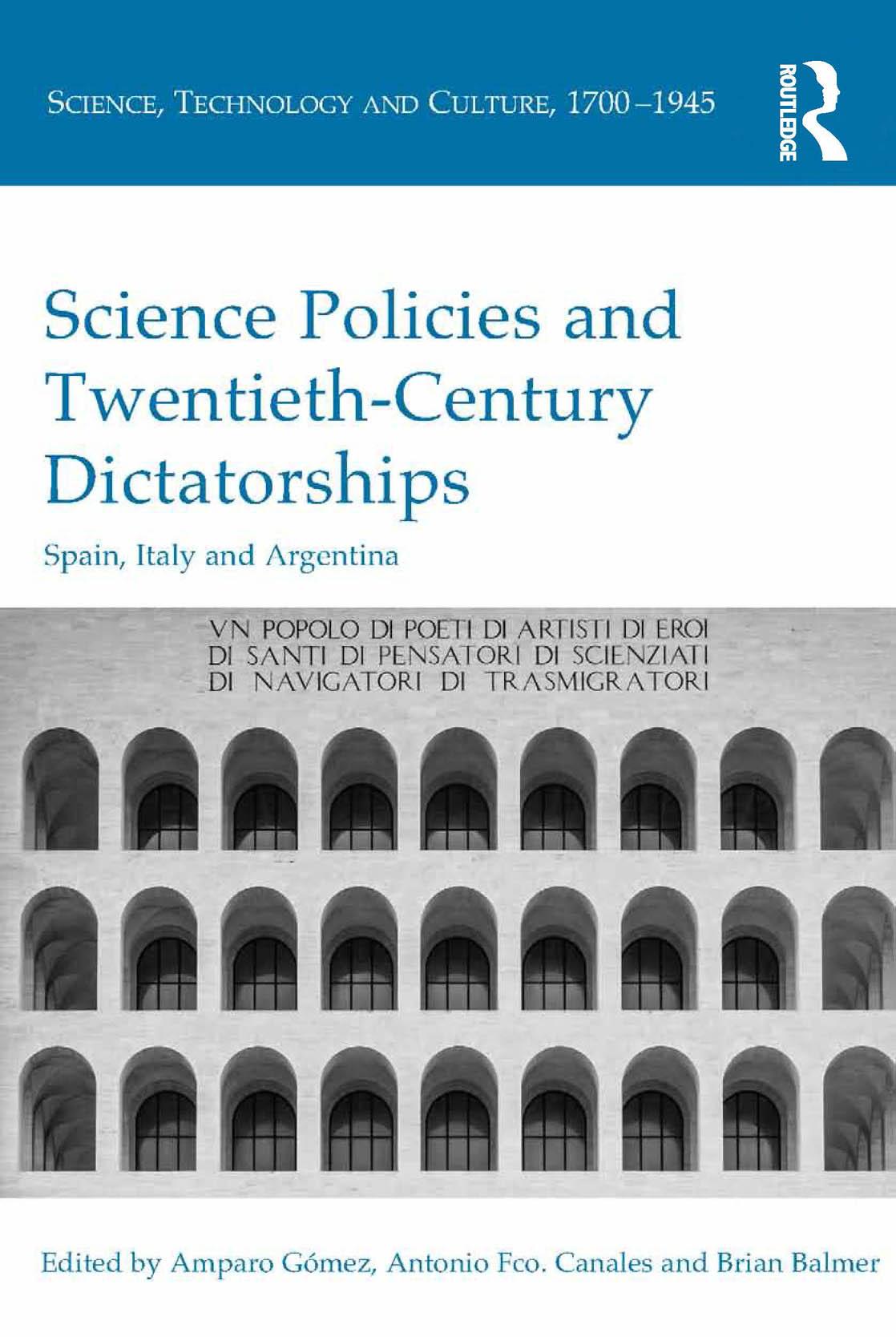
Making a fresh contribution to the political history of science, this book explores the connections between the science policies of three countries that each experienced considerable political upheaval in the twentieth century: Spain, Italy and Argentina. By focussing on these three countries, the contributors are able to present case studies that highlight the characteristics and specificities of the democratic and dictatorial political processes involved in the production of science and technology. The focus on dictatorship presents the opportunity to expand our knowledge -beyond the more extensive literature about science in Nazi Germany and Stalinist USSR -about the level of political involvement of scientists in non-democratic contexts and to what extent they act as politicians in different contexts. Key topics covered include the new forms of organization and institutionalization of science in the twentieth century; the involvement of scientific communities in the governance of science and its institutions; the role of ideology in scientific development; the scientific practices adopted by scientific communities in different contexts; and the characteristics of science and technology produced in these contexts.
Pay easily by card, Klarna, Apple Pay or Google Pay. Not happy? You always have a 14-day money-back guarantee. Read more in our terms. If you have any questions, email us at hello@memmo.org.
Memmo makes studying easier – wherever you are in the world. We bring your course books and smart study tools together in one place: summaries, quizzes, podcasts and flashcards. Plus Ted, your study buddy who answers anything you wonder. Over 50,000 students already study here – built to help you learn faster and stress less.
You might also like
Buy the book0