
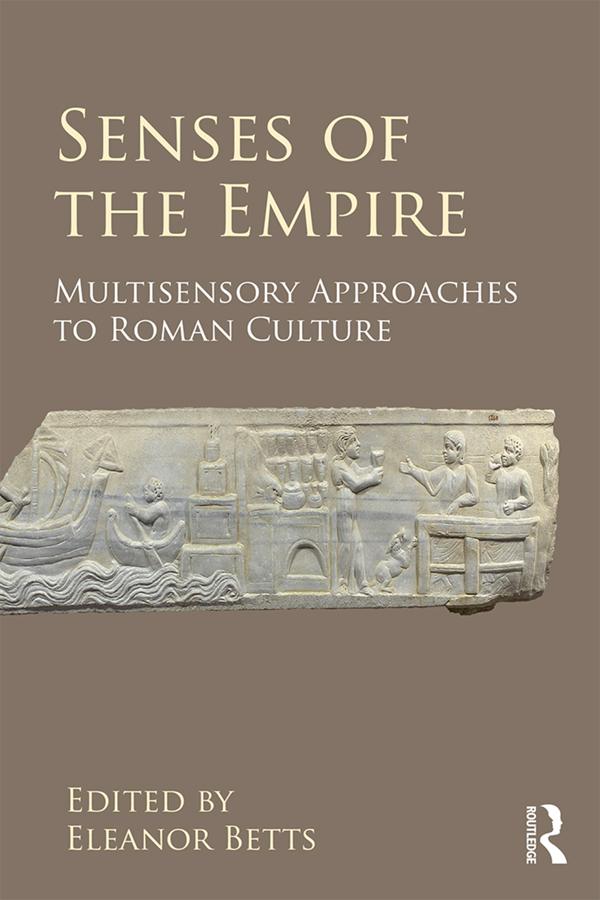
The Roman empire afforded a kaleidoscope of sensations. Through a series of multisensory case studies centred on people, places, buildings and artefacts, and on specific aspects of human behaviour, this volume develops ground-breaking methods and approaches for sensory studies in Roman archaeology and ancient history. Authors explore questions such as: what it felt like, and symbolised, to be showered with saffron at the amphitheatre; why the shape of a dancer’s body made him immediately recognisable as a social outcast; how the dramatic gestures, loud noises and unforgettable smells of a funeral would have different meanings for members of the family and for bystanders; and why feeling the weight of a signet ring on his finger contributed to a man’s sense of identity. A multisensory approach is taken throughout, with each chapter exploring at least two of the senses of sight, hearing, smell, taste and touch. The contributors’ individual approaches vary, reflecting the possibilities and the wide application of sensory studies to the ancient world. Underlying all chapters is a conviction that taking a multisensory approach enriches our understanding of the Roman empire, but also an awareness of the methodological problems encountered when reconstructing past experiences.
Pay easily by card, Klarna, Apple Pay or Google Pay. Not happy? You always have a 14-day money-back guarantee. Read more in our terms. If you have any questions, email us at hello@memmo.org.
Memmo makes studying easier – wherever you are in the world. We bring your course books and smart study tools together in one place: summaries, quizzes, podcasts and flashcards. Plus Ted, your study buddy who answers anything you wonder. Over 75,000 students already study here – built to help you learn faster and stress less.