
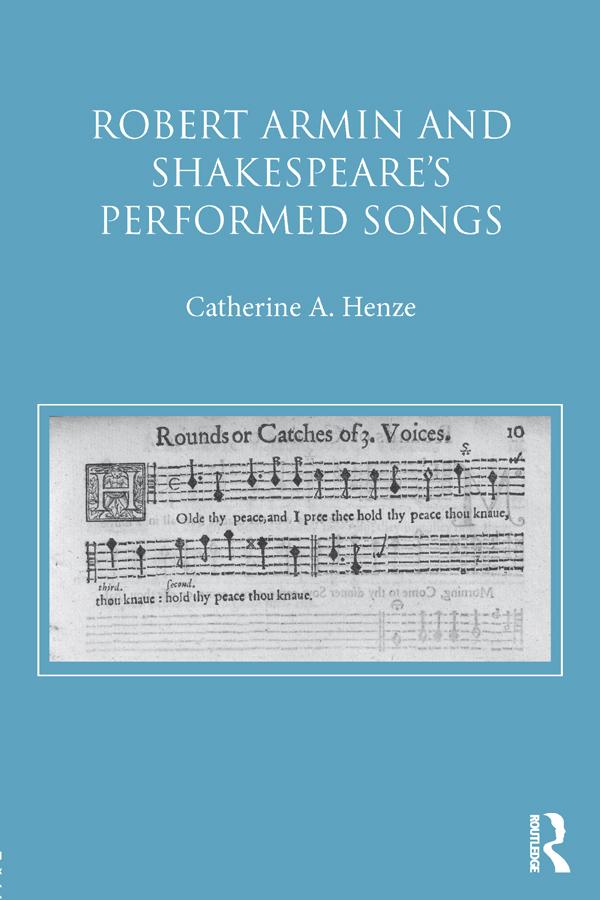
After Robert Armin joined the Chamberlain's Men, singing in Shakespeare's dramas catapulted from 1.25 songs and 9.95 lines of singing per play to 3.44 songs and 29.75 lines of singing, a virtually unnoticed phenomenon. In addition, many of the songs became seemingly improvisatory—similar to Armin's personal style as an author and solo comedian. In order to study Armin's collaborative impact, this interdisciplinary book investigates the songs that have Renaissance music that could have been heard on Shakespeare's stage. They occur in some of Shakespeare's most famous plays, including Much Ado About Nothing, Twelfth Night, Hamlet, and The Tempest. In fact, Shakespeare's plays, as we have them, are not complete. They are missing the music that could have accompanied the plays’ songs. Significantly, Renaissance vocal music, far beyond just providing entertainment, was believed to alter the bodies and souls of both performers and auditors to agree with its characteristics, directly inciting passions from love to melancholy. By collaborating with early modern music editor and performing artist Lawrence Lipnik, Catherine Henze is able to provide new performance editions of seventeen songs, including spoken interruptions and cuts and rearrangement of the music to accommodate the dramatist's words. Next, Henze analyzes the complete songs, words and music, according to Renaissance literary and music primary sources, and applies the new information to interpretations of characters and scenes, frequently challenging commonly held literary assessments. The book is organized according to Armin's involvement with the plays, before, during, and after the comic actor joined Shakespeare's company. It offers readers the tools to interpret not only these songs, but also vocal music in dramas by other Renaissance playwrights. Moreover, Robert Armin and Shakespeare's Performed Songs, written with non-specialized terminology, provides a gateway to new areas of research and interpretation in an increasingly significant interdisciplinary field for all interested in Shakespeare and early modern drama.
Pay easily by card, Klarna, Apple Pay or Google Pay. Not happy? You always have a 14-day money-back guarantee. Read more in our terms. If you have any questions, email us at hello@memmo.org.
Memmo makes studying easier – wherever you are in the world. We bring your course books and smart study tools together in one place: summaries, quizzes, podcasts and flashcards. Plus Ted, your study buddy who answers anything you wonder. Over 75,000 students already study here – built to help you learn faster and stress less.