
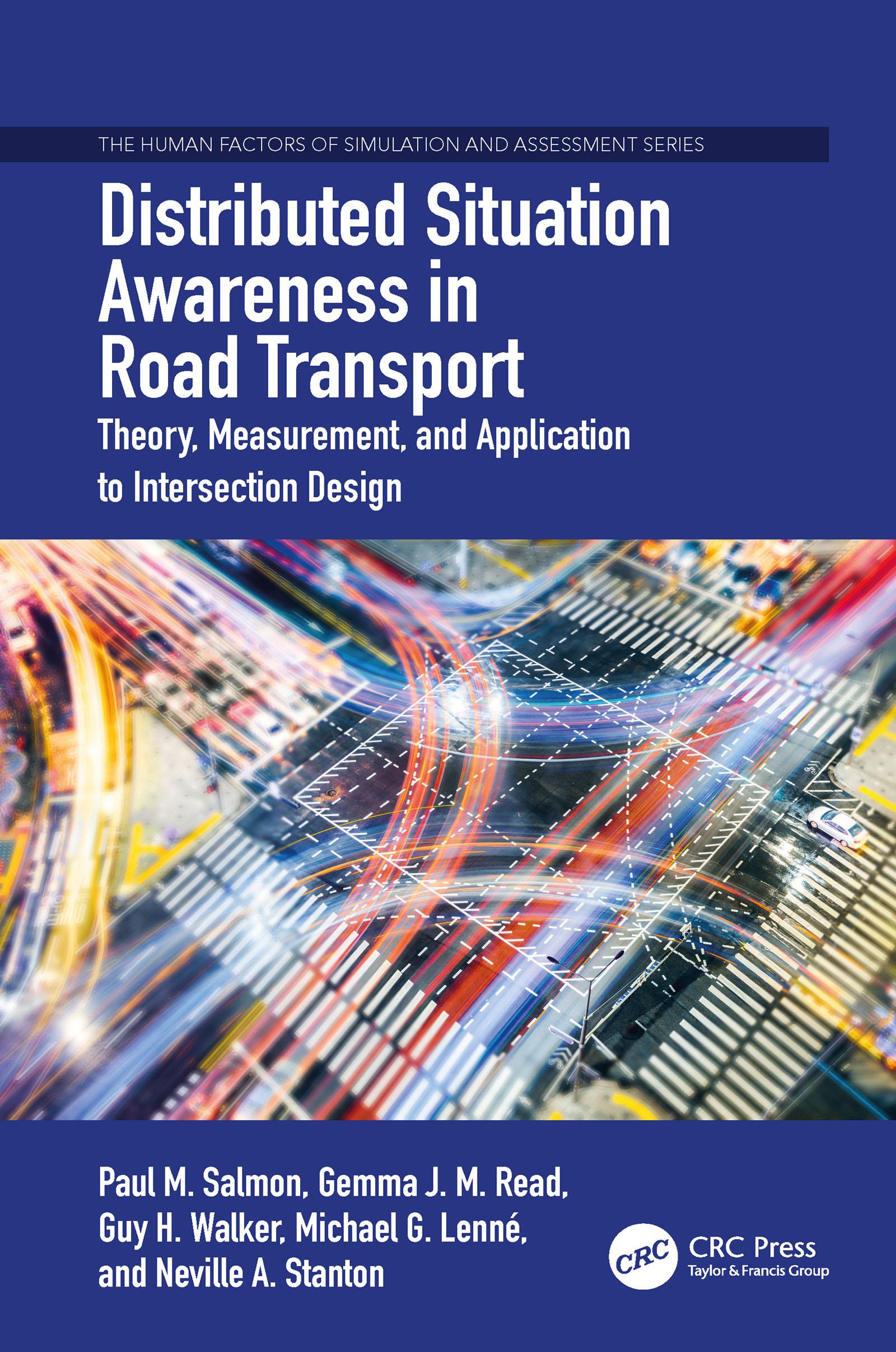
How can we design transport environments that cater to the situation awareness needs of different end-users? This book answers this question by showcasing how state-of-the-art human factors theory and methods can be used to understand how situation awareness differs across drivers, cyclists, motorcyclists, and pedestrians and creates new designs that cater to these diverse situation awareness needs.
Written by experts in the field and based on a major program of work funded by the Australian Research Council, this book outlines the distributed situation awareness model and provides practical guidance on how to study situation awareness naturalistically and how to create designs that support, rather than hinder, situation awareness. The book closes by outlining outline a generic framework to support similar applications in other areas, and discusses future applications in areas such as vehicle automation, artificial intelligence, and cybersecurity.
Features
- Challenges traditional road safety analysis, design processes and conventions
- Outlines a novel on-road study methodology for analyzing naturalistic interactions among drivers, cyclists, motorcyclists and pedestrians
- Presents a review of state-of-the-art situation awareness theory and methods
- Provides practical guidance on a series of human factors methods
- Describes a framework to support the design of transport environments
- Evaluates new intersection concepts that encompass features designed to prevent collisions at intersections
Pay easily by card, Klarna, Apple Pay or Google Pay. Not happy? You always have a 14-day money-back guarantee. Read more in our terms. If you have any questions, email us at hello@memmo.org.
Memmo makes studying easier – wherever you are in the world. We bring your course books and smart study tools together in one place: summaries, quizzes, podcasts and flashcards. Plus Ted, your study buddy who answers anything you wonder. Over 75,000 students already study here – built to help you learn faster and stress less.