
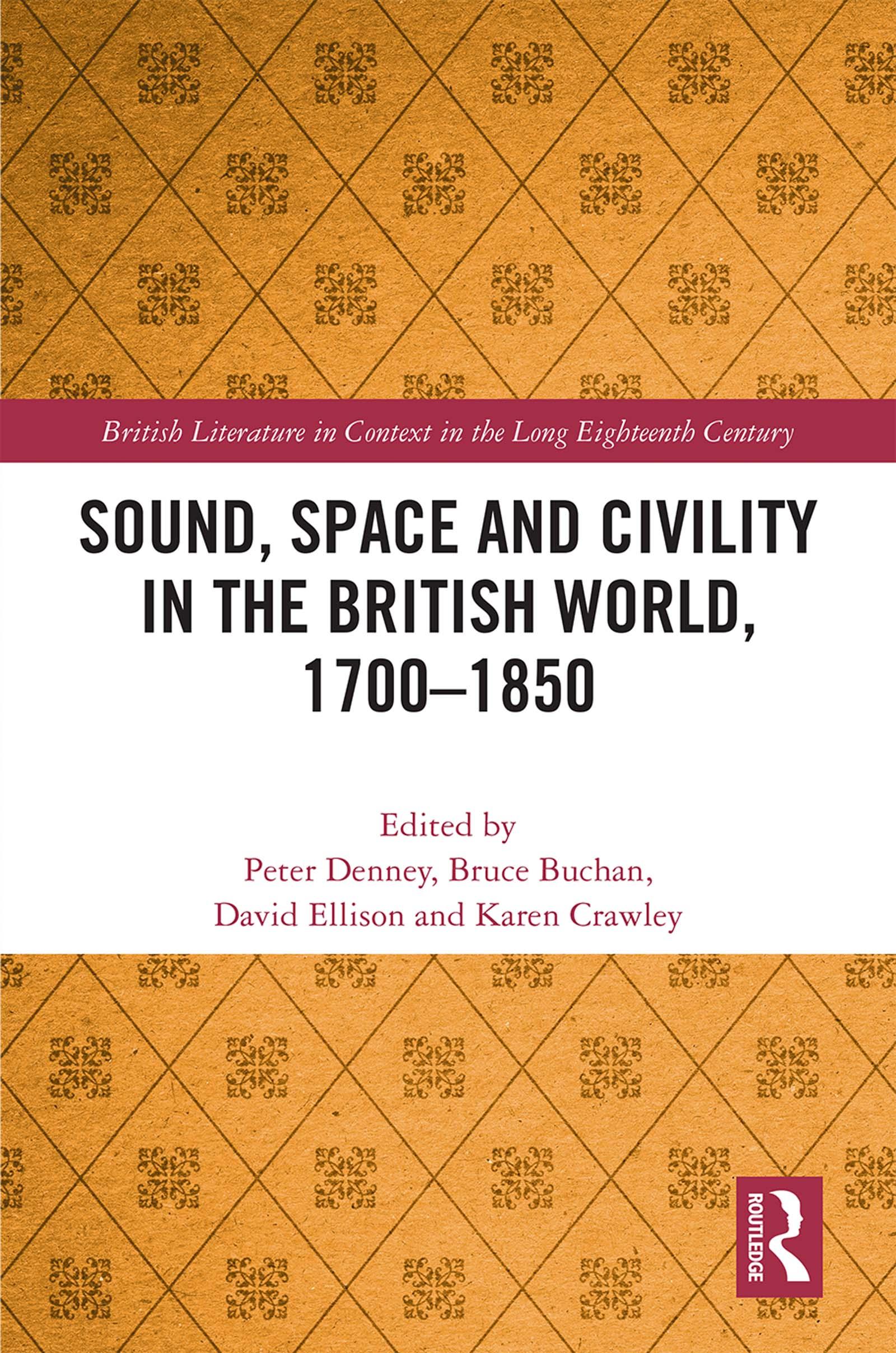
In this collection, the essays examine the critical role that judgments about noise and sound played in framing the meaning of civility in British discourse and literature during the long eighteenth century. The volume restores the sonic dimension to conversations about civil conduct by exploring how censured behaviours and recommended practices resonated beyond the written word. As the contributors show, understanding changing perceptions and valuations of noise and sound allows us to chart how civility was understood in the context of significant political, social and cultural change, including the development of urban life, the extension of empire and the consolidation of legal procedure. Divided into three parts, Sound, Space and Civility in the British World demonstrates how both noise and sound could be recognized by eighteenth-century Britons as expressions of civility. The essays also explore the audible implications of uncivil conduct to complicate our understanding of the sonic range of politeness. The uses of sound and noise to interrogate British colonial anxieties about the distinction between civility and incivility are also investigated. Taken together, the essays identify the emergence of civility as a development that radically altered sonic attitudes and experiences, producing new notions of what counted as desirable or undesirable sound.
Pay easily by card, Klarna, Apple Pay or Google Pay. Not happy? You always have a 14-day money-back guarantee. Read more in our terms. If you have any questions, email us at hello@memmo.org.
Memmo makes studying easier – wherever you are in the world. We bring your course books and smart study tools together in one place: summaries, quizzes, podcasts and flashcards. Plus Ted, your study buddy who answers anything you wonder. Over 50,000 students already study here – built to help you learn faster and stress less.
You might also like
Buy the book0