
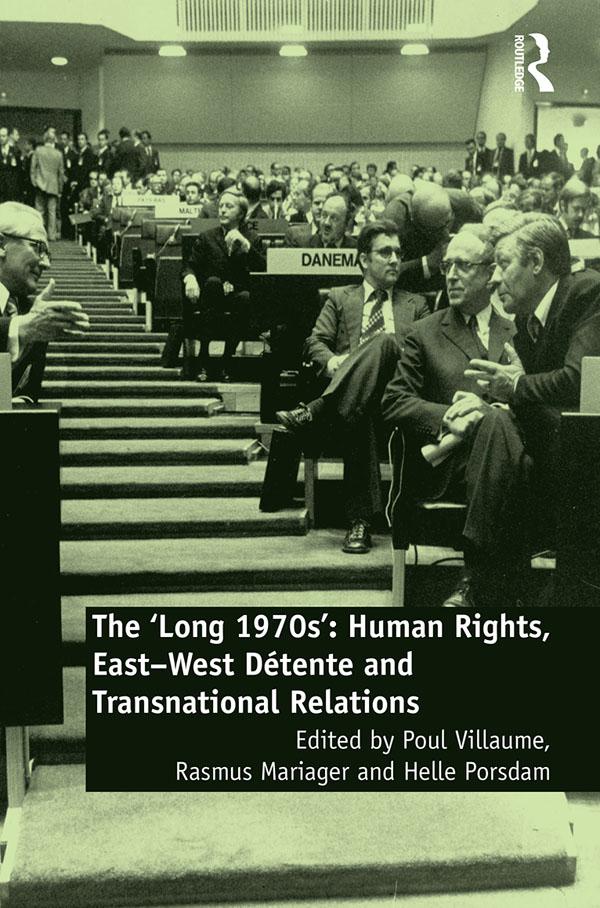
Today it is widely recognised that the 'long 1970s' was a decisive international transition period during which traditional, collective-oriented socio-economic interest and welfare policies were increasingly replaced by the more individually and neo-liberally oriented value policies of the post-industrial epoch. Seen from a distance of three decades, it is increasingly clear that these socio-economic and socio-cultural processes also found their expression at the level of national and international political power. The contributors to this volume explore these processes of political-cultural realignment and their social impetus in Western Europe and the Euro-Atlantic area in and around the 1970s in the context of three agenda-setting topics of international history of this period: human rights, including the impact of decolonisation; East-West détente in Europe; and transnational relations and discourses. Going beyond the so-called Americanisation processes of the immediate postwar period, this volume reclaims Europe's place – and particularly that of smaller European nations – in contemporary Western history, demonstrating Europe's contribution to transatlantic transformation processes in political culture, discourse, and power during this period.
Pay easily by card, Klarna, Apple Pay or Google Pay. Not happy? You always have a 14-day money-back guarantee. Read more in our terms. If you have any questions, email us at hello@memmo.org.
Memmo makes studying easier – wherever you are in the world. We bring your course books and smart study tools together in one place: summaries, quizzes, podcasts and flashcards. Plus Ted, your study buddy who answers anything you wonder. Over 50,000 students already study here – built to help you learn faster and stress less.
You might also like
Buy the book0